| Article Summary
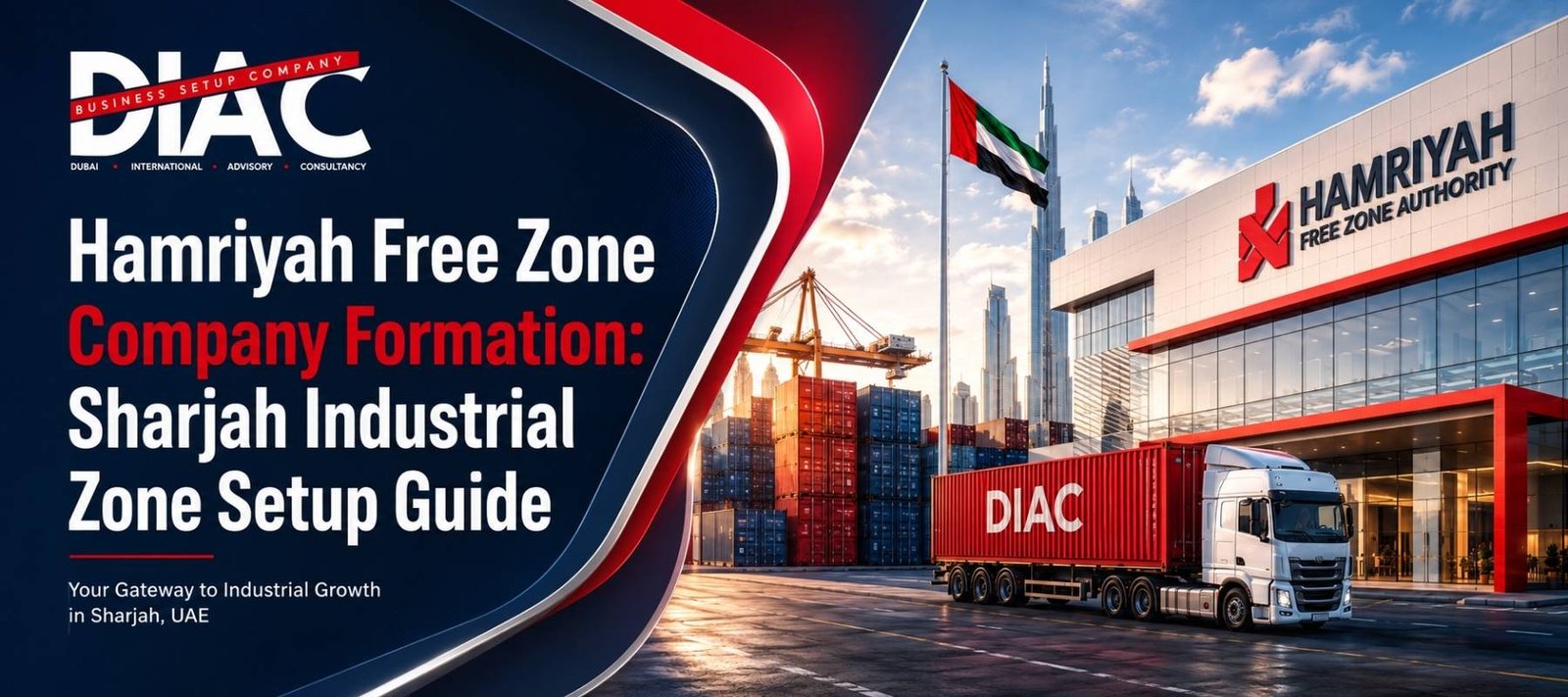
Hamriyah Free Zone (HFZ) is Sharjah’s premier industrial free zone, established in 1995 with a deep-water port, large warehouse and factory plots, and 100% foreign ownership. It is built for heavy industry: steel fabrication, oil and gas equipment, petrochemicals, and food processing. This guide covers license types, port advantage, setup costs, how HFZ compares to JAFZA and KIZAD, and the step-by-step registration process. |
Sharjah is home to three distinct free zones, each serving a different business profile. SAIF Zone caters to trading and light manufacturing near Sharjah International Airport. SHAMS serves media, publishing, and creative businesses. And then there is Hamriyah Free Zone: the industrial heavyweight of the group, built around a deep-water seaport and designed from the ground up for heavy manufacturing, engineering, chemicals, and large-footprint logistics operations.
For businesses that need physical space, port access, and industrial infrastructure at a cost significantly below Dubai, Hamriyah Free Zone is one of the most compelling options in the UAE. This guide covers everything you need to know about Hamriyah Free Zone company formation: what it offers, who it suits, how it compares to JAFZA and KIZAD, and how to register.
| Key fact: Hamriyah Free Zone is located approximately 30 kilometres north of Dubai and 10 kilometres from Sharjah city centre. Its deep-water Hamriyah Port can accommodate vessels of up to 60,000 DWT (deadweight tonnage), making it one of the most capable commercial ports in the Northern Emirates. |
What Is Hamriyah Free Zone and How Is It Different from SAIF Zone?
Both Hamriyah Free Zone and SAIF Zone are located in the Emirate of Sharjah, and both offer 100% foreign ownership, tax exemptions, and full profit repatriation. But the two zones serve fundamentally different business types and should not be treated as interchangeable.
| Criteria | Hamriyah Free Zone (HFZ) | SAIF Zone (Sharjah Airport) |
| Established | 1995 | 1995 |
| Location | Hamriyah Port, northern Sharjah coast | Adjacent to Sharjah International Airport |
| Primary focus | Heavy industry, manufacturing, petrochemicals | Trading, light manufacturing, logistics |
| Port access | Deep-water seaport (Hamriyah Port) | No dedicated seaport; road and air access |
| Plot/warehouse sizes | Large industrial plots (up to several hectares) | Smaller warehouses and offices |
| Minimum setup cost | Higher: industrial fit-out required | Lower: flexi-desk and small warehouse options |
| Best for | Steel, chemicals, oil and gas equipment, food processing | General trading, e-commerce, SME distribution |
| Staff visa allocation | Based on facility size | Package-based (more flexible for SMEs) |
If your business requires significant physical space, direct sea freight access, or involves regulated materials such as chemicals, gas equipment, or industrial steel, Hamriyah is the natural choice. If you are a trading SME or a company that primarily moves goods by road or air, SAIF Zone or SHAMS in Sharjah may be more cost-effective starting points.
Hamriyah Free Zone License Types and Industrial Activities
HFZ issues three core license categories, each covering a defined set of business activities. Unlike some free zones that issue a single trading license covering almost anything, HFZ’s activity classification is more granular and reflects its industrial orientation.
Industrial License
The industrial license is the flagship offering at HFZ and covers the manufacturing, processing, and assembly of physical goods. This is the license category that drives the zone’s economy.
Industrial license activities include:
- Steel fabrication and structural steel manufacturing
- Oil and gas equipment manufacturing and repair (valves, pipes, pressure vessels, drilling tools)
- Petrochemical product manufacturing and blending
- Food and beverage processing and packaging
- Chemical formulation and industrial chemical production
- Plastics manufacturing and polymer processing
- Electrical equipment assembly and manufacturing
- Marine equipment manufacturing and boat building
- Construction materials production (precast concrete, glass, tiles)
Commercial License
The commercial license covers trading activities: import, export, re-export, and distribution of goods. HFZ’s commercial license is particularly valuable when combined with warehouse or storage facilities adjacent to Hamriyah Port, as it allows direct sea freight receipt and dispatch without additional logistics handling.
Commercial license activities include:
- Import and export of industrial goods and raw materials
- Wholesale distribution of chemicals, steel, food commodities, and machinery
- Re-export and transit trade through Hamriyah Port
- Storage and warehousing of bulk goods including hazardous materials (with DM approval)
Service License
The service license covers professional and support services businesses operating within the free zone. This category is less common at HFZ given its industrial focus, but supports the ecosystem of businesses that serve manufacturers and port operators.
Service license activities include:
- Engineering consultancy and project management
- Freight forwarding and customs brokerage
- Inspection and testing services
- Equipment maintenance and technical services
- Business services and general consultancy
| Activity note: Businesses dealing in chemicals, hazardous materials, or petroleum-related products at HFZ require additional approvals from the Sharjah Environment and Protected Areas Authority (EPAA) and in some cases from the UAE Ministry of Climate Change and Environment. Factor this into your timeline. |
Hamriyah Port: The Deep-Water Advantage
Hamriyah Port is the single most important competitive advantage that HFZ has over every other Sharjah free zone and most Northern Emirates alternatives. The port is managed by Hamriyah Port and Customs, operating under the Sharjah Ports Authority, and offers facilities that are simply not available at airport-adjacent or inland free zones.
Port Capabilities
- Deep-water berths capable of handling vessels up to 60,000 DWT
- Bulk cargo handling: grain, cement, steel coils, construction materials
- Liquid bulk terminals for chemicals and petroleum products
- Ro-Ro (roll-on/roll-off) facilities for vehicles and heavy machinery
- Container handling and general cargo facilities
- Cold storage facilities adjacent to the port for temperature-sensitive food products
- 24-hour customs clearance operations
Strategic Location Benefits
Hamriyah Port sits on the Arabian Gulf coast at a point that offers efficient shipping routes to:
- Indian subcontinent ports (Mumbai, Nhava Sheva, Mundra): 2 to 4 days sailing
- East African ports (Mombasa, Dar es Salaam): 5 to 8 days sailing
- GCC ports (Kuwait, Bahrain, Qatar, Saudi Arabia Eastern Province): 1 to 2 days sailing
- Iranian ports (Bandar Abbas): under 12 hours sailing
- Pakistani ports (Karachi, Gwadar): 2 to 3 days sailing
For manufacturers exporting to these markets, the combination of a deep-water port within the free zone boundary and competitive industrial plot costs makes HFZ a compelling alternative to JAFZA in Dubai, which commands premium pricing driven by Dubai real estate values.
| Investor insight: Many steel fabricators and oil and gas equipment manufacturers in the UAE operate from HFZ specifically because they can receive bulk raw materials (steel coil, pipes, chemicals) directly at Hamriyah Port, process them on-site, and export finished goods without moving them through a secondary logistics hub. This single-site model significantly reduces handling costs and lead times. |
Hamriyah Free Zone Cost
HFZ costs are structured differently from most free zones because the primary cost driver is the physical facility rather than the license fee. Unlike trading-focused zones where the license fee dominates, HFZ investors spend most of their budget on warehouse or factory rental and fit-out.
License and Registration Costs
| Cost Component | Estimated Cost (AED) | Notes |
| Trade name reservation | 500 – 800 | Non-refundable |
| HFZ Company registration fee | 3,000 – 5,000 | One-time |
| Industrial license (annual) | 10,000 – 20,000 | Varies by activity category |
| Commercial license (annual) | 8,000 – 15,000 | Varies by activity scope |
| Service license (annual) | 7,000 – 12,000 | Varies by activity |
| Visa per person (investor/employee) | 3,500 – 5,000 | Federal UAE visa costs |
| Shareholder attestation and documents | 2,000 – 5,000 | Depends on nationality and structure |
Facility Rental Costs
| Facility Type | Size Range | Annual Rent (AED, approx) |
| Office unit (flexi/small) | 18 – 50 sqm | 15,000 – 35,000 |
| Small warehouse | 250 – 500 sqm | 55,000 – 100,000 |
| Standard warehouse | 500 – 1,000 sqm | 90,000 – 180,000 |
| Large warehouse or factory unit | 1,000 – 5,000 sqm | 160,000 – 600,000 |
| Industrial plot (land lease) | 5,000 sqm and above | Negotiated; long-term lease typical |
| Liquid bulk storage (per cubic metre) | Varies | Enquire directly with HFZ Authority |
| Cost comparison note: Equivalent warehouse and industrial plot space in JAFZA Dubai typically costs 40 to 70 percent more than HFZ Sharjah for comparable specifications. For capital-intensive industrial operations with large footprints, this differential can represent AED hundreds of thousands in annual savings. |
Hamriyah vs JAFZA vs KIZAD for Industrial Businesses
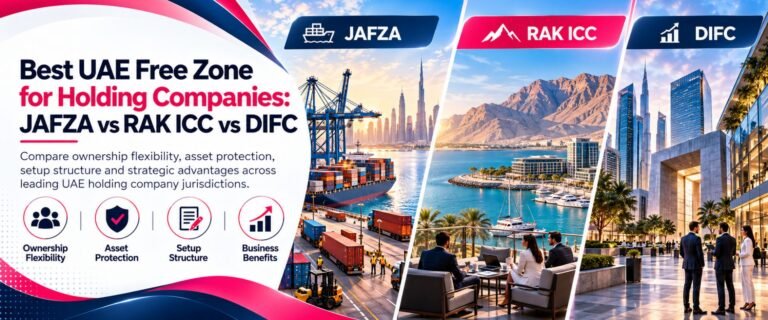
For businesses evaluating industrial free zone options across the UAE, the three most relevant comparisons are HFZ (Sharjah), JAFZA (Dubai), and KIZAD (Abu Dhabi). Each has a distinct proposition. Our dedicated guide on KIZAD company setup covers Abu Dhabi’s industrial zone in full detail.
| Criteria | Hamriyah (HFZ) | JAFZA (Dubai) | KIZAD (Abu Dhabi) |
| Location | Northern Sharjah coast | Jebel Ali, Dubai | Abu Dhabi, Khalifa Port |
| Port type | Deep-water, 60,000 DWT | Jebel Ali Port (world’s largest man-made port) | Khalifa Port (automated, deepest in GCC) |
| Cost vs Dubai | 30 to 50% lower typical | Premium (Dubai location) | Comparable to HFZ or lower on plots |
| Primary industries | Steel, chemicals, oil equipment, food | Logistics, trading, manufacturing | Heavy industry, petrochemicals, logistics |
| Plot availability | Good; large plots available | Limited; high demand | Excellent; large industrial parcels |
| Government contracts | Sharjah government access | Dubai government access | Abu Dhabi/federal government access |
| Distance from Dubai | 30 km north | On Dubai border (south) | 120 km from Dubai |
| Free zone maturity | Established 1995 | Established 1985 | Established 2012 |
| Best for | Cost-conscious industrials, Northern Emirates base | Global logistics, premium market access | Abu Dhabi supply chain, large manufacturers |
The honest verdict for most industrial investors: HFZ wins on cost and is the right choice if your primary markets are the Northern Emirates, Indian subcontinent, or East Africa, and you do not specifically need the Dubai brand or Abu Dhabi government contract access that JAFZA and KIZAD respectively provide. If your client base is global and you need the world’s busiest logistics gateway, JAFZA justifies its premium. If your primary customer is the Abu Dhabi industrial supply chain, KIZAD is the natural base.
Registration Process
The HFZ registration process is managed entirely by the Hamriyah Free Zone Authority (HFZA). Applications can be submitted through the HFZA official portal. The process is relatively straightforward for standard license categories and does not require a local UAE sponsor or partner.
Documents Required
- Completed HFZA company registration application form
- Passport copies of all shareholders and the company manager
- Curriculum vitae of the company manager (for industrial and technical activities)
- Business plan or project proposal (required for industrial license applicants)
- Bank reference letter or recent bank statement for each shareholder
- Source of funds declaration
- No Objection Certificate from current employer or sponsor (if on a UAE visa)
- For corporate shareholders: certificate of incorporation, memorandum of association, and board resolution authorising the UAE setup
- For regulated activities: pre-approval letters from relevant UAE authorities (EPAA for chemicals, MOEI for energy-related activities)
Step-by-Step Registration
- Submit initial application and trade name request on the HFZA portal
- Receive initial approval and confirmation of available facility options
- Select facility type: warehouse, factory unit, or plot (for industrial license applicants this step determines your fit-out timeline)
- Sign lease agreement and pay initial facility deposit
- Submit full shareholder documentation package for HFZA review
- Obtain any required pre-approvals from external authorities (chemicals, food, energy)
- HFZA issues company registration certificate and license
- Apply for establishment card and staff residence visas
- Open UAE corporate bank account (HFZA registration certificate required)
- Take possession of facility and begin operations
Processing Time
| Phase | Activity | Typical Duration |
| 1 | Initial approval and name reservation | 3 – 5 working days |
| 2 | Document review and facility selection | 1 – 2 weeks |
| 3 | External authority approvals (if required) | 2 – 8 weeks (varies) |
| 4 | License and registration certificate issuance | 5 – 10 working days |
| 5 | Visa processing per person | 2 – 4 weeks |
| Total (standard setup, no external approvals) | From application to operational license | 3 – 6 weeks |
| Total (industrial with external approvals) | From application to operational | 6 – 14 weeks |
DIAC assists businesses with the full HFZ registration process including document preparation, application submission, and coordination with HFZA. For a UAE-wide overview of free zone options, visit our UAE free zone company formation guide or speak to a consultant directly.
Frequently Asked Questions
Can a foreign national own 100% of a company in Hamriyah Free Zone?
Yes. Like all UAE free zones, Hamriyah Free Zone permits 100% foreign ownership of registered entities. You do not need a UAE national shareholder, local sponsor, or service agent. The company can be owned entirely by one or more foreign nationals or by a foreign corporate entity. This is one of the fundamental advantages of free zone formation versus UAE mainland in sectors where full foreign ownership on the mainland remains restricted.
What is the minimum investment required to set up in HFZ?
HFZ does not publish a universal minimum investment figure because the primary cost variable is the facility you choose. The license fees themselves (AED 7,000 to 20,000 depending on category) are relatively modest. The significant cost is the warehouse or factory lease, which starts at around AED 55,000 per year for a small warehouse. A realistic first-year budget including license, facility, documentation, and initial visa costs starts at approximately AED 80,000 to 120,000 for a basic trading or service setup, rising to AED 250,000 and above for a manufacturing operation with warehouse space.
Can a Hamriyah Free Zone company sell goods in the UAE mainland market?
A HFZ-registered free zone company cannot sell directly to UAE mainland customers without additional steps. To supply mainland UAE buyers, your HFZ company must either: appoint a UAE mainland distributor or trading agent who holds a mainland trade license, pay applicable UAE customs duties (typically 5% for most goods) to bring products out of the free zone into the mainland market, or establish a separate mainland company entity in Dubai, Sharjah, or another emirate. For a guide on the mainland side of this equation, see our mainland company formation in Dubai guide.
Does Hamriyah Free Zone allow storage of chemicals and hazardous materials?
Yes, HFZ is one of the few free zones in the UAE that has dedicated facilities for chemical storage, liquid bulk handling, and hazardous materials warehousing. This is a significant differentiator versus SAIF Zone or most Dubai free zones, which have restrictions on hazardous material storage. Businesses dealing in chemicals, petroleum products, industrial solvents, and similar materials need prior approval from the Sharjah EPAA and must comply with HFZA’s specific safety and environmental standards. Chemical storage facilities within HFZ are purpose-built with containment, fire suppression, and monitoring systems.
Is Hamriyah Free Zone a good option for food processing businesses?
Yes. HFZ has a growing food processing and packaging cluster supported by cold storage facilities adjacent to Hamriyah Port and easy access for bulk food commodity imports. Businesses involved in food processing need to obtain a food manufacturing or food trading license from HFZ and register with the Sharjah Municipality Food Control Section (or the relevant UAE food authority depending on distribution channels). The port’s cold chain facilities are a significant advantage for frozen food, dairy, and fresh produce businesses.
What types of visas can a Hamriyah Free Zone company sponsor?
An HFZ-registered company can sponsor UAE residence visas for investors (partners/shareholders), employees, and their eligible family members. The number of visas you can apply for is linked to your facility size (larger warehouses and factory units have higher visa allocations). Standard packages typically start with two to six visas. Investor visas are three-year renewable residence visas. The UAE Golden Visa is also available to qualifying HFZ investors meeting the relevant investment threshold through the federal ICP system.
Can I operate from Hamriyah Free Zone without a physical warehouse?
For service license holders, HFZ offers office-only setups without a requirement for a warehouse or factory unit. However, for industrial and commercial license holders, a physical facility is required because the license activities involve the handling, storage, or production of physical goods. Virtual office or flexi-desk options at HFZ are limited compared to trading-focused zones like SAIF Zone or IFZA Dubai. If a fully virtual presence is your priority, a different free zone is likely a better fit.
How does Hamriyah Free Zone compare to SAIF Zone for a trading company?
For a pure trading company without a port-dependent logistics requirement, SAIF Zone typically offers a more cost-effective and faster setup, with smaller warehouses, lower entry-level costs, and more flexible SME packages. HFZ is better suited to trading businesses that specifically benefit from deep-water port access: bulk commodity traders, heavy equipment importers, chemical distributors, and steel traders. If you are comparing the two for a specific business model, our Sharjah free zone comparison guide covering SAIF Zone and SHAMS gives a detailed side-by-side breakdown.
Ready to Set Up in Hamriyah Free Zone?DIAC’s business setup consultants manage the complete Hamriyah Free Zone registration process: license category selection, HFZA application, facility selection, document attestation, shareholder structuring, visa processing, and bank account introduction. We work with industrial investors, manufacturing companies, and trading businesses entering HFZ from the UAE and internationally. Explore all UAE free zone options at Dubai Free Zone Company Setup or contact our team for a free consultation on your industrial setup. |
About the Author
Adil Ahmad is a senior business setup consultant at DIAC with specialist knowledge in UAE industrial free zone formation, including Hamriyah Free Zone, KIZAD, JAFZA, and SAIF Zone. He advises manufacturing businesses, commodity traders, and logistics operators on zone selection, license structuring, and regulatory compliance across the UAE.