By Adil Ahmad, Senior Business Setup Consultant, DIAC
Summary
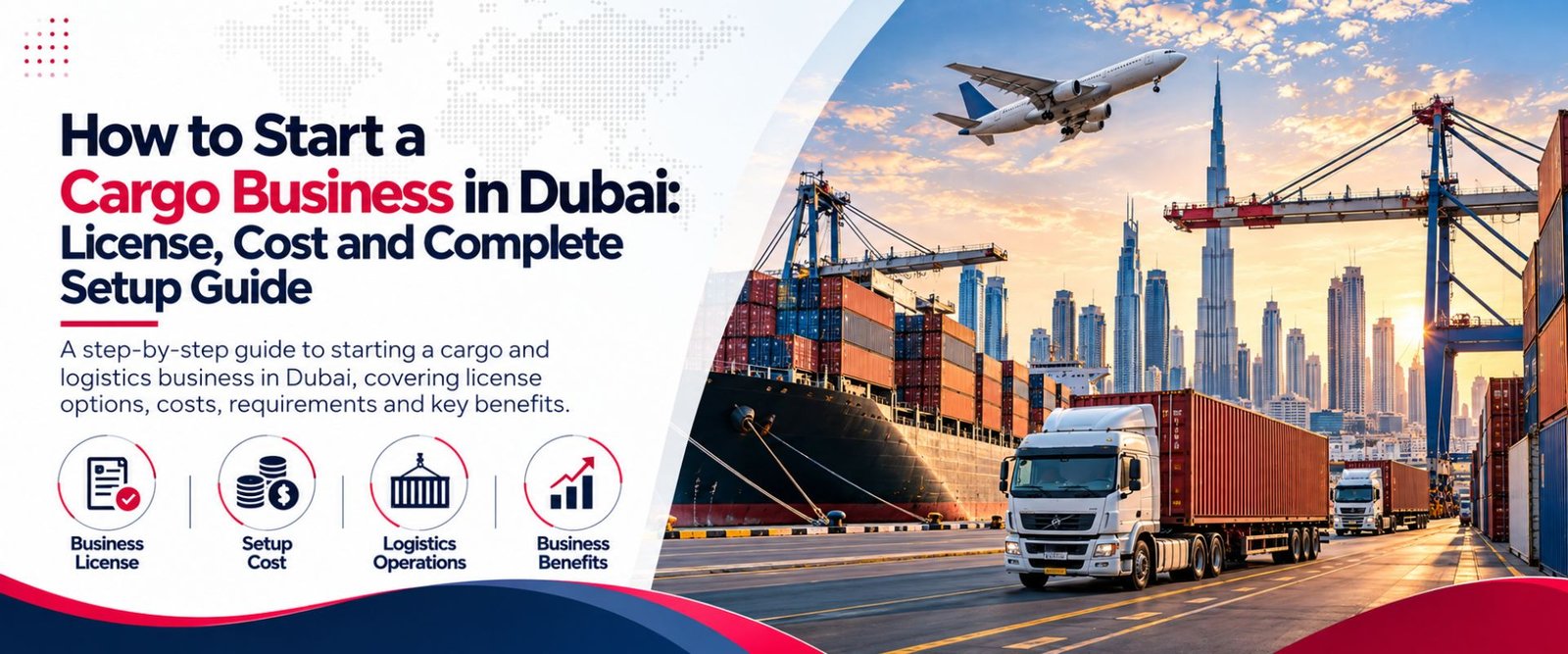
To start a cargo business in Dubai, you need a trade license with the right freight activities, a Dubai Customs code and any approvals your cargo type requires. This guide covers air, sea and land cargo licenses, cargo activity names, JAFZA, DAFZA, Dubai South and mainland options, setup costs, customs and IATA requirements, dangerous goods rules, insurance and the step-by-step setup process.
Dubai moves goods for half the world. Jebel Ali Port, Dubai International and Al Maktoum airports, and fast customs systems make it one of the easiest places to run a freight business. But cargo is also a licence-by-detail sector. Pick a vague activity or the wrong zone and you will struggle with banks, customs and big clients. After setting up freight forwarders, packers and transport firms through business setup in Dubai, I have learned that the first decision matters most: what exactly will you move, and how?
Why Start a Cargo Business in Dubai?
- Global gateway: direct sea and air links between Asia, Europe, Africa and the GCC
- World-class infrastructure: Jebel Ali Port, two international airports and bonded logistics zones
- Strong demand: import, export, re-export and booming e-commerce shipments
- 100% foreign ownership on the mainland and in free zones
- Digital customs: fast electronic clearance through Dubai Trade and Mirsal
- Tax efficiency: international transport services are generally zero-rated for VAT
Types of Cargo Businesses You Can Start
| Cargo Business | Best Base | Key Requirement |
| Air cargo agent and air freight forwarder | DAFZA or Dubai South | IATA accreditation for airline billing, DGR-trained staff for dangerous goods |
| Sea cargo and freight forwarding (FCL, LCL) | JAFZA or mainland | Dubai Customs code, FIATA membership recommended |
| Land freight and GCC trucking | Mainland | RTA permits, GPS tracking, commercial vehicle insurance |
| Customs brokerage and clearing | Mainland or JAFZA | Customs broker registration and bank guarantee |
| Cargo packaging and moving | Mainland or free zone | Warehouse or packing space |
| Loading, unloading and stevedoring | Mainland or port zones | Port and maritime approvals |
| Cold chain and perishables | DAFZA, JAFZA or Dubai South | Temperature-controlled storage, food import approvals |
| Dangerous goods cargo | JAFZA | Civil Defence approval, IMDG or IATA DGR compliance |
| Freight brokerage and consultancy | Free zone flexi-desk | No fleet or warehouse needed |
Cargo Business Activities on Your Trade License
Choosing precise activities is the most important step. “Cargo services” on its own is too vague for banks and customs. Common activities include:
- Air cargo services and air cargo agents
- Sea cargo services and sea freight forwarding
- Forwarding of freight by air, sea and land
- Cargo freight consultancy for brokers and advisers
- Cargo packaging and packing services
- Cargo loading and unloading and loading and unloading of goods
- Stevedoring at ports
- Shipping container loading and container handling
- Freight broker services
- Sea shipping lines and ship agency
- Ship piloting and towing
- Inland water transport of freight
- Hazardous materials transport
- Sea transport of oil and petroleum products
- Ground services and transport of goods by road
Marine activities such as stevedoring, ship piloting, towing and inland water transport usually also need approval from the Dubai Maritime Authority. If you plan a broader supply chain, warehousing or 3PL model, read our logistics business in Dubai guide.
Air Cargo Business in Dubai
Air cargo companies usually base themselves at Dubai Airport Free Zone (DAFZA), next to Dubai International, or at Dubai South near Al Maktoum International. Air freight suits high-value, urgent, pharmaceutical and perishable goods, and many forwarders now serve e-commerce brands shipping across the GCC. See our e-commerce business guide for that market.
To work directly with airlines, an air cargo agent typically needs IATA accreditation, which involves financial checks and a guarantee. Staff handling dangerous goods by air must be trained under IATA Dangerous Goods Regulations.
Sea Cargo Services and Freight Forwarding
Sea freight forwarders handle full container loads (FCL), less than container loads (LCL), breakbulk and project cargo. JAFZA, beside Jebel Ali Port, offers bonded warehouses and direct port access, while mainland forwarders serve local importers easily.
Professional membership with FIATA and local freight associations helps win international agency partners. Companies working in Sharjah or the Northern Emirates can compare our mainland company formation in Sharjah option.
Land Cargo and GCC Road Freight
Land cargo and trucking companies are usually licensed on the mainland so they can serve customers across all emirates and bid for local contracts. Expect:
- RTA commercial vehicle and operator permits
- GPS tracking on commercial vehicles
- Comprehensive vehicle insurance plus goods-in-transit cover
- Customs transit documents for cross-border GCC shipments
Our transport company setup guide covers fleet licensing in more detail.
Dangerous Goods and Cold Chain Cargo
Dangerous goods are grouped into nine classes, from Class 1 explosives to Class 5 oxidisers and Class 9 miscellaneous items such as lithium batteries. Moving them requires:
- IMDG Code compliance for sea and IATA DGR compliance for air
- Civil Defence approval for any storage facility
- Certified staff and proper packaging, labelling and documentation
Cold chain operators need temperature-controlled vehicles or storage, monitoring logs and the relevant food or pharmaceutical import approvals.
Mainland vs Free Zone for a Cargo Company
| Factor | Mainland | Free Zone (JAFZA, DAFZA, Dubai South) |
| Customers | UAE-wide, including local importers | International, re-export and zone-based clients |
| Fleet and trucking | Best choice | Limited |
| Port or airport access | Through customs and agents | Direct, bonded facilities |
| Warehouse options | Industrial areas | Bonded warehouses in the zone |
| Best for | Land freight, customs brokers, local delivery | Sea and air forwarding, re-export, DG and cold chain |
A lean freight brokerage or consultancy with no fleet or warehouse can start from a low-cost zone such as Meydan. Port-linked traders also look at Fujairah free zone for Indian Ocean access. Compare all options in our free zone business setup guide or our mainland company formation in Dubai service.
Dubai Customs Code and Mirsal Registration
Any cargo business that imports, exports or clears goods needs a Dubai Customs client code. You apply through Dubai Trade after your license is issued. The registration fee itself is modest, usually a few hundred dirhams, but customs brokers and some importers must also provide a bank guarantee.
Once registered, your team submits declarations electronically through Mirsal, Dubai Customs’ clearance system. Start this registration as soon as your license is issued so your first shipment is not delayed.
Cargo Business Setup Cost in Dubai
| Cost Item | Indicative Amount (AED) |
| Freight consultancy or brokerage license (free zone) | From around 12,500 a year |
| Mainland freight forwarding license | 15,000 to 30,000 a year |
| JAFZA, DAFZA or Dubai South license | From around 15,000 to 20,000 a year, plus facility |
| Dubai Customs code | A few hundred, plus any required guarantee |
| Warehouse in a free zone | Often AED 40 to 80 per sq ft a year |
| RTA vehicle permits and GPS | Varies per vehicle |
| Cargo and liability insurance | Based on cargo value and volume |
| Visa per employee | 4,000 to 6,000 |
Typical first-year totals – Freight consultancy or brokerage: AED 40,000 to 80,000 – Freight forwarder with office in JAFZA: AED 80,000 to 250,000+ – Land cargo with a fleet: AED 100,000 to 300,000+
Use our business setup cost calculator to estimate your setup.
How to Start a Cargo Business in Dubai: Step-by-Step
- Define your cargo model: air, sea, land, multimodal or brokerage.
- Select precise activities, such as sea cargo services or freight forwarding by air.
- Choose your jurisdiction: mainland, JAFZA, DAFZA, Dubai South or a consultancy zone.
- Reserve your trade name and get initial approval.
- Secure an office, warehouse or yard.
- Receive your trade license.
- Register with Dubai Customs and set up Mirsal access.
- Apply for sector approvals: RTA, Civil Defence, maritime authority or IATA, as needed.
- Arrange cargo and vehicle insurance.
- Apply for visas through our PRO services
- Open your bank account. We support corporate bank account opening for freight companies.
- Register for VAT and corporate tax.
Consultant tip: Run your customs registration, insurance quotes and IATA or FIATA applications in parallel with the license. Doing them one after another can add four to six weeks before your first shipment.
Cargo Insurance and Liability
- Marine cargo insurance for sea shipments
- Air cargo insurance for air freight
- Goods-in-transit cover for road freight
- Freight forwarder liability insurance to protect against client claims
Standard carrier liability limits are often far below the value of electronics or pharmaceuticals, so all-risk cover is strongly advised.
VAT and Compliance for Cargo Companies
- International transport of goods is generally zero-rated for VAT, while local transport is standard-rated at 5%
- Register for VAT once taxable supplies pass AED 375,000 with the Federal Tax Authority
- Register for corporate tax and keep clean shipment and invoice records
Our VAT consultants and accounting services help freight firms apply the correct VAT treatment to each shipment.
Frequently Asked Questions
What license do I need to start a cargo business in Dubai?
A mainland or free zone trade license with specific freight activities, such as air cargo services, sea cargo services or freight forwarding, plus a Dubai Customs code.
How much does it cost to start a cargo company in Dubai?
A freight consultancy can start from around AED 40,000 in the first year. A forwarder with an office or warehouse often costs AED 80,000 to 250,000+.
Is JAFZA or DAFZA better for a cargo company?
JAFZA suits sea freight and port-linked cargo. DAFZA suits air cargo near Dubai International. Dubai South suits Al Maktoum airport operations.
Do I need IATA accreditation to start an air cargo business?
You need it to book and bill directly with airlines as an IATA cargo agent. Smaller forwarders may start by working through accredited partners.
Can I start a cargo business without owning trucks or a warehouse?
Yes. A freight brokerage or consultancy license lets you arrange shipments through carriers and warehouses you contract with.
Do I need a Dubai Customs code?
Yes, if you import, export or clear goods. You register through Dubai Trade after licensing.
What approvals are needed for stevedoring or marine cargo?
Marine activities such as stevedoring, piloting and inland water transport usually need maritime authority and port approvals in addition to your trade license.
How long does it take to start a cargo company in Dubai?
The license often takes one to three weeks. Customs registration, approvals and banking usually bring the total to four to eight weeks.
Start Your Cargo Business with DIAC
DIAC helps you choose the right cargo activities and jurisdiction, then handles licensing, customs registration, approvals, visas and banking. Book a free consultation for an exact quote.
About the Author
Adil Ahmad is a senior business setup consultant at DIAC. He advises freight forwarders, air and sea cargo agents, packers, transport firms and customs brokers on cargo company formation across Dubai mainland, JAFZA, DAFZA and Dubai South.