By Adil Ahmad, Senior Business Setup Consultant, Dubai International Advisory Consultants
Summary
To start an e-commerce business in Dubai, you need a licence that covers online trading: a DET e-commerce licence on the mainland, a free zone e-commerce licence, or a DET eTrader licence if you are a UAE or GCC national selling from home. Then open a bank account, connect a payment gateway, sort delivery and register for VAT when required. Free zone setups can start from about AED 6,000.
E-commerce Business in Dubai at a Glance
| Question | Short answer |
|---|---|
| Do I need a licence to sell online? | Yes, including sales through Instagram, WhatsApp or TikTok |
| Main licence options | DET mainland e-commerce, free zone e-commerce, DET eTrader |
| Foreign ownership | 100% on the mainland and in free zones |
| Starting cost | About AED 6,000 (free zone, no visa) to AED 25,000+ (mainland) |
| Main law | Federal Decree-Law No. 14 of 2023 on Trading by Modern Technological Means |
| VAT | Mandatory once taxable sales pass AED 375,000 a year |
Do You Need a Licence to Sell Online in Dubai?
Yes. Selling products or services online in the UAE is a commercial activity, whether you run a Shopify store, sell on Amazon or noon, or take orders through Instagram and WhatsApp. The UAE regulates online trade through Federal Decree-Law No. 14 of 2023 on Trading by Modern Technological Means, which sets rules for licensing, consumer information and data. Selling without a licence can lead to fines and blocked accounts, and banks and payment gateways will not onboard you without one. You can check licensed activities and fees on the DET’s Invest in Dubai portal.
Types of E-commerce Licences in Dubai
| Licence | Who it suits | Visas | Where you can sell |
|---|---|---|---|
| DET mainland e-commerce licence | Any nationality building a UAE-focused brand | Yes | Anywhere in the UAE and abroad |
| Free zone e-commerce licence | Founders who want low cost and 100% ownership | Yes, by package | Online to UAE and global customers; physical mainland retail needs a partner |
| DET eTrader licence | UAE and GCC nationals selling from home through social media | No | Online, small scale |
| Portal or marketplace activity | Businesses running a platform for other sellers | Yes | Depends on jurisdiction |
The eTrader licence is a low-cost option, around AED 1,000 a year, but it is only open to UAE and GCC nationals living in Dubai and does not allow staff visas. Most expat founders choose a mainland or free zone company. Some e-commerce activities also need a no objection from the Telecommunications and Digital Government Regulatory Authority (TDRA) during licensing.
Popular E-commerce Business Ideas in Dubai
Online shoppers in the UAE spend across many categories, but a few niches work especially well for new brands:
- Fashion and modest wear: strong demand, especially around Ramadan and Eid
- Beauty, perfume and oud: high margins and loyal repeat buyers
- Health, fitness and supplements: check Ministry of Health and Prevention and municipality rules for regulated products
- Home, kitchen and electronics accessories: easy to source and ship
- Digital products and online courses: low start-up cost and no stock
- Specialty food and gifts: needs food safety approvals before you sell
Pick a niche where you can offer faster delivery, better service or a clearer brand than the big marketplaces.
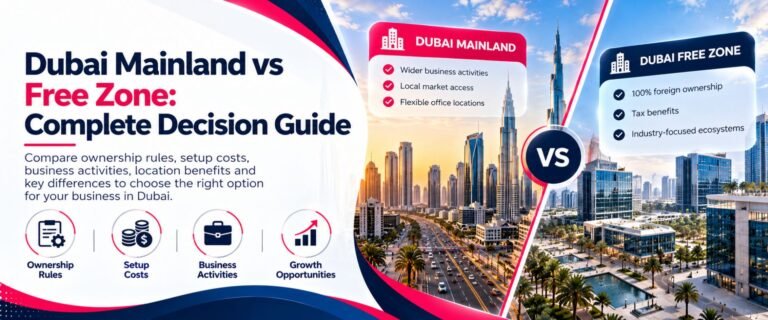
Mainland vs Free Zone for an E-commerce Business
| Point | Mainland (DET) | Free zone |
|---|---|---|
| Ownership | 100% for e-commerce activities | 100% |
| Sell online to UAE customers | Yes | Yes, in most cases |
| Physical shop or showroom in the city | Yes | No, needs a mainland entity |
| Office | Ejari registered office | Flexi-desk options |
| Cost | Higher | Lower |
If you plan to open a pop-up, showroom or supply local retailers, choose the mainland. Our guide to mainland company formation in Dubai covers the process. If you sell purely online and want to keep costs low, a free zone works well. Compare options in our Dubai free zone business setup guide.
Best Free Zones for an E-commerce Business
- Dubai CommerCity: built for e-commerce, with fulfilment and warehouse space
- IFZA: affordable packages for online stores and digital brands. See our IFZA free zone company guide
- Meydan Free Zone: popular with online sellers who want a Dubai address
- DMCC: suits larger brands and trading companies
- SHAMS (Sharjah): one of the lowest-cost options for small online businesses
Step-by-Step: How to Start an E-commerce Business in Dubai
- Choose your products and model: your own stock, dropshipping, digital products or a marketplace. If you do not want to hold stock, read how to start a dropshipping business in Dubai.
- Pick mainland or free zone based on where and how you will sell.
- Reserve a trade name and protect your brand with trademark registration.
- Get initial approval and any required no objection letters.
- Secure an office or flexi-desk and sign the lease.
- Receive your trade licence and establishment card.
- Apply for visas through our PRO services team if you need them.
- Open a corporate bank account. Our guide to corporate bank account opening in Dubai explains what banks ask for.
- Build your store, connect payments and set up delivery, then launch.

Documents Required for an E-commerce Licence
- Passport copies of all shareholders and the manager
- Passport photo and visa or entry stamp
- Emirates ID, if you are a UAE resident
- Proposed trade names and a short business description
- Lease agreement or flexi-desk contract
- Memorandum of Association for an LLC
- Attested company documents if a corporate shareholder is involved
E-commerce Licence Cost in Dubai
| Option | Typical first-year cost (AED) |
|---|---|
| DET eTrader licence (UAE and GCC nationals) | About 1,000 to 1,500 |
| Free zone e-commerce licence, no visa | About 6,000 to 10,000 |
| Free zone licence with one or two visas | About 11,000 to 30,000 |
| DET mainland e-commerce licence | About 12,000 to 25,000, plus office and visas |
On top of the licence, budget for your website or store platform, payment gateway fees, stock, packaging, delivery, marketing and accounting. These are market ranges and change with packages. For a quick estimate, use our business setup cost calculator.
Setting Up Payments, Your Website and Marketplaces
- Payment gateway: providers need your trade licence, bank account and a live website with clear terms, prices in AED and a refund policy.
- Your own store: Shopify, WooCommerce and similar platforms work well; show your company name and licence details on the site.
- Marketplaces: Amazon.ae and noon ask for a trade licence, and a VAT certificate once you are registered.
- Cash on delivery: still common in the UAE, but plan for higher return rates and courier fees.
Delivery, Customs and Fulfilment
You can store and ship orders yourself or use a fulfilment partner. If you import stock, you will need a Dubai Customs code, and your licence must allow import activity. Many online brands start with a third-party fulfilment company and move to their own warehouse as volumes grow. Our guide to starting a logistics business in Dubai explains how fulfilment and customs work.
- Self-fulfilment: lowest cost at the start, but you handle packing and courier bookings
- Third-party fulfilment (3PL): the partner stores, packs and ships for a fee per order
- Marketplace fulfilment: programmes like Fulfilled by Amazon or noon handle delivery and returns
VAT, Corporate Tax and Consumer Rules
- VAT: 5% on most sales. Registration is mandatory once taxable sales pass AED 375,000 a year and optional from AED 187,500. Our VAT consultants can register you.
- Corporate tax: every company registers with the Federal Tax Authority; 0% up to AED 375,000 of taxable income and 9% above.
- Consumer protection: show full prices including VAT, delivery times, and a clear return and refund policy.
- Bookkeeping: track sales by channel from day one with our accounting services.
Marketing Your Online Store on Social Media
Instagram, TikTok and Snapchat drive a large share of online sales in the UAE. If you or the people you pay promote products on social media, check the UAE Media Council’s advertiser permit rules. Our guide to the influencer licence in Dubai explains when a permit is needed.
Common Mistakes New Online Sellers Make
- Selling on Instagram before getting a licence
- Choosing a licence that does not include import or the right product categories
- Launching without a refund policy, which payment gateways require
- Ignoring VAT until sales pass the threshold, then paying penalties
- Underestimating delivery and return costs in the pricing
Frequently Asked Questions
Can I sell on Instagram without a licence in Dubai?
No. Selling through social media is commercial activity and needs a licence, such as an eTrader, free zone or mainland e-commerce licence.
Can expats get an eTrader licence?
No. The DET eTrader licence is for UAE and GCC nationals living in Dubai. Expats usually choose a free zone or mainland e-commerce licence.
What is the cheapest e-commerce licence in Dubai?
For expats, a free zone e-commerce licence without a visa is usually the cheapest, from about AED 6,000 a year.
Can a free zone e-commerce company sell to UAE customers?
Yes, online sales to UAE customers are generally allowed. Opening a physical shop in the city or supplying mainland retailers needs a mainland company.
Do I need an office for an e-commerce business?
A free zone flexi-desk is usually enough. A mainland company needs an Ejari registered office.
Do I need to register for VAT?
Yes, once taxable sales pass AED 375,000 in 12 months. You can register voluntarily from AED 187,500.
Can I sell on Amazon.ae and noon with a free zone licence?
Yes. Both platforms accept UAE trade licences, including free zone licences, as long as your activity covers the products you sell.
Can I run an e-commerce business from home in Dubai?
UAE and GCC nationals can use the eTrader licence from home. Expats need a company licence, but a free zone flexi-desk lets you manage the business from home in practice.
Do I need a licence to sell digital products online?
Yes. Selling courses, templates or software is still trading, so you need a licence with a suitable digital or e-commerce activity.
How long does it take to get an e-commerce licence?
Free zone licences can be issued within a few working days. Mainland licences usually take one to two weeks.
Start Your E-commerce Business with DIAC
We help you choose the right licence, set up your company, open your bank account and stay compliant with VAT, so you can focus on selling. Selling fashion? See how to start a clothing business in Dubai. Explore our business setup in Dubai services or book a free consultation today.
About the Author
Adil Ahmad is a senior business setup consultant at DIAC who helps online sellers, D2C brands and marketplace sellers choose the right licence and set up their companies in Dubai.