
Summary
Starting a fintech company in Dubai requires first identifying whether your business is a technology provider or a regulated financial service. Payment companies may require Central Bank approval, DIFC financial businesses come under the DFSA, and virtual asset companies in Dubai can fall under VARA. This guide explains fintech licensing, setup costs, regulatory routes, capital requirements, compliance, documents and the complete process for establishing a fintech business in Dubai.
Dubai has developed a strong ecosystem for payment technology, digital banking infrastructure, wealth technology, RegTech, blockchain, digital assets and financial software. However, fintech company setup in Dubai is different from forming an ordinary software company. The word “fintech” does not identify your licence. What matters is exactly what your platform does with customers’ money, accounts, investments, payments or virtual assets. That distinction should be resolved before choosing mainland, DIFC or another free zone.
Do You Need a Fintech License in Dubai?
Not every fintech company requires a financial services licence. A business building software for banks, fraud-detection tools, financial analytics, KYC technology or accounting platforms may operate primarily as a technology company if it does not itself perform a regulated financial service. A company that receives, transfers, holds, invests or manages customer funds can enter a regulated perimeter.
This creates two broad routes.
Non-Regulated Fintech Technology Company
Examples can include:
- Financial SaaS
- Banking software development
- RegTech platforms
- Fraud detection technology
- KYC technology
- Financial data analytics
- API infrastructure
- Accounting technology
- Cybersecurity products for financial institutions
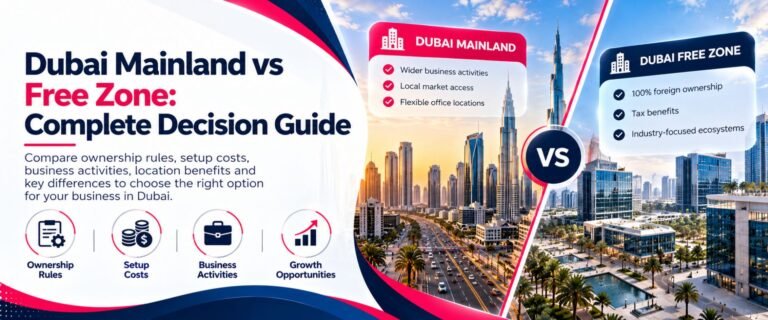
A standard technology or software activity may be sufficient where the company genuinely provides technology rather than regulated financial services. Founders considering this model can compare Dubai free zone business setup with Dubai mainland company formation.
Regulated Fintech Business
Regulatory authorisation can be required when the business provides services such as:
- Payment accounts
- Payment instruments
- Merchant acquiring
- Payment aggregation
- Money transfers
- Investment services
- Asset management
- Custody
- Virtual asset exchange
- Virtual asset brokerage
- Virtual asset transfer
- Other regulated financial activities
The regulator depends on the activity and jurisdiction.
Which Regulator Applies to a Fintech Company in Dubai?
This is the most important decision in the entire setup process.
CBUAE for UAE Payment Services
The Central Bank of the UAE regulates retail payment services at the federal level.
Its Retail Payment Services framework covers categories including payment account issuance, payment instrument issuance, merchant acquiring, payment aggregation, domestic and cross-border transfers, payment initiation and payment account information services.
If your business model involves a payment processing company registration in Dubai, digital payment infrastructure or another regulated payment service, determine whether Central Bank authorisation applies before selecting the commercial entity.
Review the official CBUAE licensing information for the current regulatory perimeter.
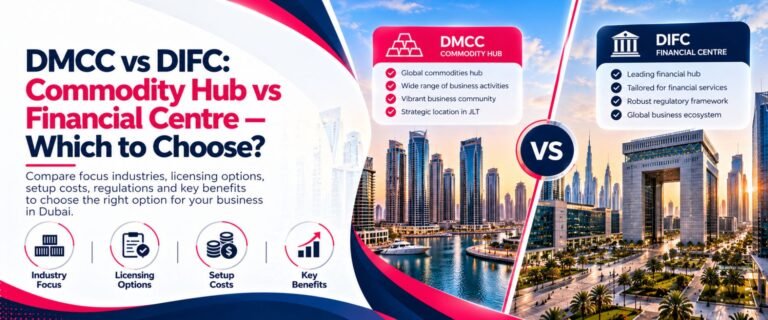
DFSA for Regulated Fintech in DIFC
The Dubai Financial Services Authority regulates financial services conducted in or from the Dubai International Financial Centre.
A DIFC fintech license is not one universal licence. The permission depends on the financial service the company intends to provide.
DIFC can be relevant for:
- Investment technology
- WealthTech
- Institutional financial services
- Payment services
- Investment platforms
- Financial market infrastructure
- Certain crypto-token related financial services
Early-stage businesses developing an innovative regulated financial product can also examine the DFSA’s Innovation Testing Licence. It provides a controlled testing environment for eligible financial innovations. For crypto-specific DIFC information, see DIAC’s DIFC crypto licence guide.
VARA for Virtual Asset Businesses in Dubai
A fintech company conducting regulated virtual asset activities in Dubai outside DIFC can fall under the Virtual Assets Regulatory Authority. VARA states that firms conducting virtual asset activities in or from Dubai, excluding DIFC, must obtain the appropriate VASP licence before commencing regulated operations.
Relevant activities include areas such as:
- Exchange services
- Broker-dealer services
- Custody
- Transfer and settlement
- Virtual asset management
- Lending and borrowing
- Advisory services
A digital asset company registration in the UAE therefore requires more than obtaining a blockchain or technology trade licence if the actual activity falls within the virtual asset regulatory perimeter.
FSRA and ADGM
ADGM is located in Abu Dhabi rather than Dubai, but founders frequently compare it with DIFC when planning a UAE fintech business. Financial services within ADGM are regulated by the FSRA. Its authorisation process reviews the business model, management, regulatory systems, financial resources and compliance arrangements before Financial Services Permission is granted.
Read our detailed ADGM company formation guide if you are comparing Abu Dhabi and Dubai financial jurisdictions.
How Much Does a Fintech License Cost in Dubai?
There is no single fintech company license cost because a software startup and a regulated payment provider have completely different requirements. A non-regulated technology company may only need normal incorporation, office, visa and operating costs.
A regulated fintech needs to budget for:
- Company incorporation
- Regulatory application fees
- Annual regulatory fees
- Minimum regulatory capital
- Office premises
- Compliance personnel
- AML and KYC infrastructure
- Cybersecurity
- Technology audits
- Legal advice
- Insurance
- Banking
- Ongoing reporting
CBUAE Payment Service Capital Requirements
For regulated retail payment services, capital is a major cost. Under the current CBUAE framework, minimum initial capital varies by licence category and payment volume. Category IV starts at AED 100,000, while other categories range from AED 500,000 to AED 3 million depending on the licence category and expected payment volumes.
This is regulatory capital. It should not be confused with your total startup budget.
VARA License Fees
VARA publishes category-specific fees.
Its current schedule lists application fees of AED 40,000 for Advisory Services and Transfer and Settlement Services and AED 100,000 for several other regulated activities, including Exchange, Broker-Dealer and Custody Services. Annual supervision fees can be AED 80,000 or AED 200,000 per regulated activity depending on the category.
Company incorporation, office, staffing, compliance systems and regulatory capital are additional.
For this reason, an advertised low-cost commercial licence should never be treated as the total cost of a regulated fintech setup.
Mainland vs DIFC vs ADGM for Fintech
| Structure | Typically Relevant For |
|---|---|
| Dubai Mainland | Technology businesses and structures supporting UAE-market operations |
| DIFC + DFSA | Regulated institutional and financial services businesses |
| ADGM + FSRA | Abu Dhabi-based regulated financial businesses and institutional fintech |
| Dubai + VARA | Regulated virtual asset businesses outside DIFC |
| General Free Zone | Non-regulated financial technology, software and support businesses |
The correct choice follows the product.
Do not start by asking which free zone has the cheapest fintech licence. Start by mapping exactly what the platform will do.
How to Start a Fintech Company in Dubai Step by Step
Step 1: Define the Product
Document how money, data and customer assets move through your platform.
Ask:
- Do we receive customer funds?
- Do we hold customer funds?
- Do we transfer funds?
- Do we issue payment instruments?
- Do we provide investment services?
- Do we custody assets?
- Do we operate a virtual asset platform?
- Are we simply selling software?
These answers determine whether the company is regulated.
Step 2: Carry Out a Regulatory Assessment
Map the activity against CBUAE, DFSA or VARA requirements.
This step should happen before company incorporation because creating the wrong entity can mean restructuring later.
Step 3: Choose the Jurisdiction
Once the regulatory perimeter is known, select the legal structure. A non-regulated fintech may have flexibility between mainland company formation and a Dubai free zone company. A regulated financial service needs a structure compatible with its regulator.
Step 4: Prepare the Regulatory Business Plan
Regulated fintech applications normally require substantially more than a standard company formation plan.
Prepare details on:
- Revenue model
- Target market
- Product flow
- Ownership
- Management
- Financial forecasts
- Technology architecture
- Risk controls
- Compliance procedures
- AML and KYC
- Cybersecurity
- Customer protection
- Business continuity
Step 5: Build the Compliance Infrastructure
Your compliance system should be designed alongside the product. This can include identity verification, sanctions screening, transaction monitoring, suspicious-activity escalation, user risk scoring and record retention. Authentication and cybersecurity are also part of the wider fintech infrastructure in the UAE, particularly where customer accounts and financial data are involved.
Step 6: Submit Company and Regulatory Applications
The sequence depends on the regulator. For example, VARA uses a staged process involving Approval to Incorporate followed by the full VASP licence application. ADGM similarly uses regulatory review, in-principle approval and fulfilment of conditions before final Financial Services Permission.
Step 7: Establish the Office and Team
Regulated firms may need appropriate local substance and qualified senior personnel.
Depending on the activity, key roles can include:
- Senior executive
- Compliance officer
- MLRO
- Finance function
- Technology leadership
- Risk management
Step 8: Open the Corporate Bank Account
Fintech banking can involve enhanced due diligence because banks need to understand the regulatory status, source of funds, customer flows and business model. Our comparison of the best business bank accounts in the UAE can help when preparing the banking strategy.
Step 9: Complete Testing and Go Live
A regulated fintech should not launch regulated services merely because the commercial company has been incorporated. Commercial registration and regulatory permission are separate. VARA, for example, states that an entity with only in-principle approval cannot begin serving clients until full VASP licensing is obtained.
Documents Required for Fintech Company Setup
Requirements depend heavily on the regulatory route, but founders should prepare for:
- Shareholder and director identification
- Ownership structure
- Source of funds
- Detailed business plan
- Financial forecasts
- Product architecture
- AML and KYC policies
- Risk-management framework
- Cybersecurity documentation
- Data policies
- Governance structure
- Key-person CVs
- Compliance procedures
- Business continuity planning
- Office documentation
- Regulatory forms
Regulated applications usually require far more documentation than a normal Dubai technology licence.
Common Fintech Setup Mistakes
The most expensive mistake is forming the company before confirming the regulator.
Other common problems include:
- Treating fintech as one licence category
- Confusing a technology licence with financial authorisation
- Underestimating regulatory capital
- Building the product before compliance architecture
- Ignoring AML and KYC costs
- Choosing DIFC, mainland or a free zone based only on price
- Assuming crypto and payment businesses follow the same rules
- Launching before receiving final regulatory permission
Frequently Asked Questions
How much does a fintech license cost in Dubai?
It depends on whether the company is regulated. A technology fintech may only need normal company formation costs, while payment, investment or virtual asset businesses can require regulatory application fees, capital, compliance systems and specialist staff.
Do I need a CBUAE license for a payment company in Dubai?
If the business provides a regulated retail payment service covered by the Central Bank framework, prior CBUAE licensing is required unless a specific exemption applies.
Can I start a fintech company in a Dubai free zone?
Yes, particularly for non-regulated financial technology businesses. Regulated financial services require the appropriate regulatory structure and authorisation.
What is a DIFC fintech license?
A DIFC fintech business conducting regulated financial services requires the relevant DFSA authorisation. Early-stage eligible firms may also explore the Innovation Testing Licence.
Do crypto companies need VARA approval?
Businesses carrying out regulated virtual asset activities in or from Dubai outside DIFC are subject to VARA’s licensing regime.
Can foreigners own a fintech company in Dubai?
100% foreign ownership is available across many Dubai company structures. Regulatory approvals, capital and management requirements still depend on the specific financial activity.
Start Your Fintech Company in Dubai With DIAC
The correct fintech business setup starts with the regulatory perimeter, not with the cheapest commercial licence.
DIAC helps founders determine whether their product is non-regulated technology or falls under CBUAE, DFSA, VARA or another UAE regulatory framework. We then coordinate the entity structure, company formation, regulatory planning, documentation, visas, banking and ongoing company administration.
For founders seeking fintech licensing services or a business setup partner in the UAE, our business setup consultants in Dubai can review the product model before you commit to a jurisdiction or regulatory application.