Summary
To start a healthcare business in Dubai, you need two approvals: a trade license for the company and a DHA facility license for the clinical premises (or a DHCA license inside Dubai Healthcare City). This guide explains which healthcare businesses need DHA approval, the step-by-step licensing process, realistic setup costs, mainland versus DHCC, documents, timelines and the compliance mistakes that delay most new clinics.
Dubai is one of the strongest healthcare markets in the Middle East, but the Dubai Health Authority (DHA) regulates it tightly, so the right setup route matters as much as the idea itself.
After helping clinic founders, pharmacy investors and health tech startups through business setup in Dubai, I have seen that most delays come from three things: the wrong activity code, a Practitioner-in-Charge who is not yet licensed, and fit-out work started before layout approval. This guide shows you how to avoid all three.
Why Start a Healthcare Business in Dubai?
- Insured patient base: Health insurance is mandatory for Dubai residents, which gives private providers a reliable, paying patient pool.
- Medical tourism demand: Dubai actively promotes elective care, dental, fertility, orthopaedics and wellness to international patients.
- 100% foreign ownership: Most healthcare activities on the mainland and all activities in Dubai Healthcare City allow full foreign ownership.
- Tax efficiency: No personal income tax, 9% corporate tax only on profits above AED 375,000, and preventive and basic healthcare services are zero-rated for VAT.
- Government support: Dubai actively encourages private investment in specialty care, home care and digital health.
Types of Healthcare Businesses You Can Start in Dubai
Choosing the correct facility category is your first real decision. An application filed under the wrong category is rejected and has to restart.
| Healthcare Business | Licensing Route | Key Staff Requirement |
| Medical clinic (GP, family medicine, cardiology or other specialty) | DHA facility license | DHA-licensed physician as Practitioner-in-Charge (PIC) |
| Dental clinic or dental and aesthetic clinic | DHA facility license | Licensed dentist as PIC |
| Pharmacy or drug store | DHA facility license | DHA-licensed pharmacist-in-charge |
| Diagnostic, laboratory or imaging centre | DHA facility license | Licensed radiologist or pathologist |
| Physiotherapy and rehabilitation centre | DHA facility license | Licensed physiotherapist |
| Aesthetic clinic or medical spa | DHA facility license | Licensed physician for injectables, laser and IV therapy |
| Home healthcare and adult day care | DHA facility license | Licensed nurse or physician as PIC |
| Mental health and counselling clinic | DHA facility license | Licensed psychiatrist or clinical psychologist |
| Ayurveda, homeopathy and TCM clinic | DHA facility license (TCAM category) | Licensed complementary medicine practitioner |
| Day surgery centre or specialty hospital | DHA facility license | Full clinical team, higher capital |
| Telemedicine platform | DHA telehealth approval | DHA-licensed doctors |
| Medical equipment trading | Trade license plus MOHAP registration | No clinical PIC needed |
| Gym, yoga studio, nutrition coaching, medical fitness centre (non-clinical) | Trade license only | No DHA license needed |
What industries require DHA approval? Any business that diagnoses, treats, prescribes, dispenses medicine or performs an invasive procedure needs DHA approval. If you only sell products or offer general wellness, a standard trade license is usually enough. If you plan to import devices, read our guide to starting a medical equipment trading company in Dubai.
What Is a DHA License?
A DHA license is the approval the Dubai Health Authority issues so that a facility or professional can legally provide healthcare in Dubai. There are two kinds, and you need both:
- DHA facility license: issued to the premises through the Sheryan portal. One license per location.
- DHA professional license: issued to each doctor, nurse, pharmacist or allied healthcare professional working in the facility.
Alongside these, your company needs a commercial or professional trade license from the Dubai Department of Economy and Tourism (DET). The DET activity must match your DHA facility category. For a clinic-specific walkthrough, see our clinic license in Dubai guide.
How to Start a Healthcare Business in Dubai: Step-by-Step
- Define your activity and facility category. Confirm the exact DHA category and services before anything else.
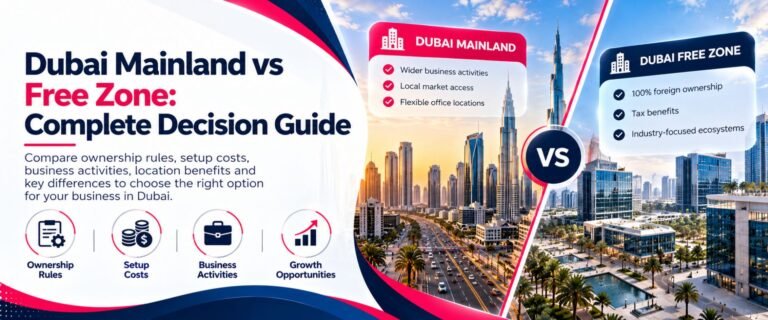
- Choose mainland or free zone. Mainland gives full city market access; DHCC suits specialist and medical tourism models. Compare both routes through our mainland company formation in Dubai
- Reserve the trade name and get initial approval from DET.
- Apply for DHA initial (preliminary) approval on Sheryan with your service list and ownership details.
- Secure premises and register Ejari. The location must meet DHA zoning, access and size rules.
- Submit floor plans for DHA layout approval before any fit-out begins. The DHA Health Facility Guidelines set the design standards.
- Recruit and license your Practitioner-in-Charge and clinical staff.
- Complete fit-out, equipment and contracts: medical waste disposal, malpractice insurance and infection control plans.
- Pass DHA inspection and receive the new facility license.
- Issue the trade license, visas and bank account. Our PRO services team handles visas and government submissions, and we support corporate bank account opening.
- Activate insurance billing through eClaimLink and connect to NABIDH, Dubai’s health information exchange.
Consultant tip: Never sign a long lease before DHA confirms your location and layout. A rejected layout after fit-out is the costliest mistake I see.
Documents Required for a Healthcare Business License
- Passport copies and visa or Emirates ID of all shareholders
- Trade name reservation and DET initial approval
- Business plan with service list and staffing plan
- Tenancy contract, Ejari and approved floor plan
- PIC details with DHA professional license or application number
- Equipment list and medical waste contract
- Malpractice (professional indemnity) insurance policy
- Memorandum of Association for LLC structures
DHA Professional License: The Critical Path
Every doctor, dentist, nurse, pharmacist and allied health professional needs an individual DHA license. The process includes:
- Primary source verification through DataFlow (often four to eight weeks)
- DHA assessment exam through Prometric for most categories
- Good Standing Certificate from previous regulators
- Minimum post-qualification experience, which varies by title
Aesthetic doctors face extra DHA requirements, including proof of training in the specific procedures they will perform. Start recruiting your PIC the day your business plan is final. For senior clinicians and investors, a UAE Golden Visa can also be an option.
Dubai Healthcare City (DHCC) Company Setup
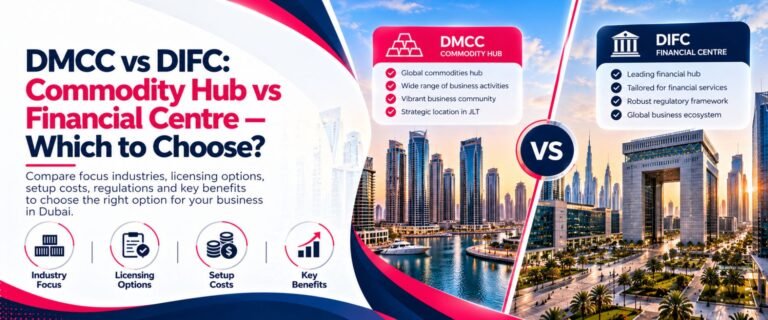
Dubai Healthcare City is a dedicated healthcare free zone. Clinical facilities there are licensed by the Dubai Healthcare City Authority (DHCA), not DHA, which keeps company formation and clinical licensing under one regulator.
| Criteria | DHCC | Dubai Mainland |
| Ownership | 100% foreign | 100% for most healthcare activities |
| Regulator | DHCA (company and clinical) | DET plus DHA |
| Patient market | Medical tourism, specialist referrals | Full city, residential communities |
| Rent | Premium | Wide range of areas and budgets |
| Best for | Specialist clinics, international brands, pharma offices | GP clinics, pharmacies, home care, dental |
For non-clinical healthcare companies such as consultancy or health tech, our free zone business setup in Dubai page compares other zones. Planning to operate in both emirates? Abu Dhabi needs separate approval; see our DOH license Abu Dhabi guide.
Healthcare Business Setup Cost in Dubai
These are indicative first-year ranges. Government fees change, so confirm them when you apply.
| Cost Item | GP or Dental Clinic | Pharmacy | Aesthetic Clinic |
| Trade license | AED 10,000 to 18,000 | AED 10,000 to 18,000 | AED 8,000 to 15,000 |
| DHA facility license | AED 5,000 to 12,000 | AED 3,000 to 5,000 | AED 4,000 to 10,000 |
| DHA professional license (each) | AED 2,000 to 5,000 | AED 2,000 to 4,000 | AED 2,000 to 5,000 |
| Fit-out | AED 120,000 to 400,000+ | AED 80,000 to 200,000+ | AED 80,000 to 300,000+ |
| Medical equipment | AED 50,000 to 300,000+ | AED 20,000 to 80,000 | AED 30,000 to 200,000+ |
| Annual rent | AED 80,000 to 250,000+ | AED 60,000 to 180,000+ | AED 70,000 to 200,000+ |
| Insurance | AED 15,000 to 40,000 | AED 8,000 to 20,000 | AED 10,000 to 30,000 |
| Estimated first year | AED 350,000 to 1,000,000+ | AED 200,000 to 500,000+ | AED 250,000 to 750,000+ |
Budget for three to six months of running costs before patient volumes break even. Try our business setup cost calculator for the company side.
Timeline: A straightforward clinic usually takes four to six months from idea to first patient. The trade license can take days; DHA approvals and PIC licensing take the longest.
Insurance, Tax and Ongoing Compliance
- Malpractice insurance: Mandatory for every licensed facility and practitioner, renewed with the license.
- Employee health insurance: Every staff member needs DHA-compliant cover.
- VAT: Preventive and basic healthcare is zero-rated, while cosmetic procedures that are not medically necessary carry 5% VAT. Check the Federal Tax Authority guidance or speak to our VAT consultants.
- Corporate tax and bookkeeping: Register for corporate tax and keep clean records with professional accounting services.
- Renewals: Facility, professional and trade licenses renew yearly, with DHA audits possible at any time.
Common Mistakes That Delay Healthcare Licensing
- Picking an activity code that does not match the DHA category
- Signing a lease before location and layout approval
- Hiring a PIC without an active DHA license
- Offering botox, fillers or IV drips under a salon or spa license
- Missing medical waste, infection control or data protection policies
Digital Health and Telemedicine
Telemedicine platforms need DHA telehealth approval and DHA-licensed doctors. General wellness apps are treated as technology businesses, while medical devices need MOHAP registration.
Frequently Asked Questions
Can a foreigner own 100% of a healthcare business in Dubai?
Yes. Most healthcare activities on Dubai mainland allow 100% foreign ownership, and DHCC has always allowed it. Confirm your specific activity with DET before applying.
How do I get a new facility license from DHA?
Apply on Sheryan after DET initial approval, secure premises, get layout approval, appoint a licensed PIC, then pass DHA inspection to receive the license.
How long does it take to open a clinic in Dubai?
Usually four to six months. DHA inspection and PIC licensing, including DataFlow and Prometric, are the longest stages.
Does a wellness centre or spa need DHA approval?
Only if it offers medical services such as laser, injectables, chemical peels, PRP or IV therapy. Massage and beauty services need a trade license only. See our beauty salon business guide.
Can I buy an existing pharmacy or clinic in Dubai?
Yes, but ownership changes need DHA approval and a new PIC arrangement where required. Review licenses, leases and liabilities before buying.
What is the difference between DHA, DHCA and DOH?
DHA licenses healthcare across Dubai, DHCA licenses facilities inside Dubai Healthcare City, and DOH regulates Abu Dhabi. Each needs a separate license.
Is health insurance mandatory for small healthcare businesses?
Yes. Every employee needs compliant health insurance, and the facility needs malpractice cover for all licensed staff.
Start Your Healthcare Business in Dubai with DIAC
DIAC handles the full journey: activity selection, DET trade license, DHA or DHCC facility licensing, practitioner licensing support, visas, bank account and ongoing compliance. Book a free consultation with our healthcare setup team today.
About the Author
Adil Ahmad is a senior healthcare business setup consultant at DIAC. He advises clinic founders, pharmacy owners, hospital investors and digital health entrepreneurs on DHA facility licensing, DHCC company formation, DET trade licenses and DOH approvals in Abu Dhabi.