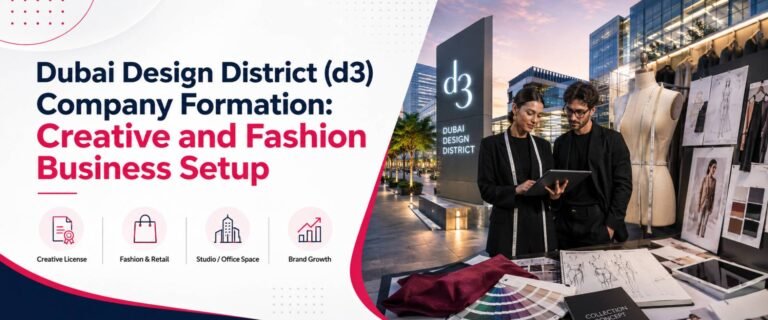
Dubai sits at the centre of one of the world’s most active textile and garment trade corridors. The emirate’s port infrastructure, particularly Jebel Ali, which handles over 13 million TEUs annually, combined with its strategic position between Asian manufacturing hubs and European and African consumer markets, makes it a natural base for textile trading, distribution, and manufacturing businesses. Whether you are planning a fabric import and wholesale operation, a garments retail boutique, a home textiles brand, or a full manufacturing facility, Dubai has the infrastructure, the free zones, and the regulatory framework to support each of those models.
What this guide focuses on is the information that most standard business setup articles on this topic skip entirely: the specific license activities and their distinctions, why Dubai Textile City requires a TEXMAS approval before you can even apply for a license, what the 2026 updates to fabric labeling and customs HS code enforcement mean for importers, and which jurisdiction genuinely fits which business model. Getting these decisions right before application day saves significant time and amendment costs. If you want expert guidance from the start, the business setup consultants in Dubai page explains how our team supports textile business formation end-to-end.
Defining Your Business Model Before Choosing a License
The textile sector in Dubai is not one business type — it is several overlapping industries that each require a different license category. The first decision is understanding which model fits your plan, because the license type, jurisdiction, approvals, and facility requirements all follow from this choice.
| Business Model | License Type | Best Jurisdiction |
| Retail fabric or garments shop | Commercial (Textile / Garments Trading) | Dubai mainland (DET) |
| Wholesale textile distribution | Commercial (Textile Trading) | Mainland or Dubai Textile City |
| Fabric import and re-export | Commercial (Trading / General Trading) | JAFZA or Dubai Textile City |
| Clothing / garments manufacturing | Industrial license | Dubai Industrial City or JAFZA |
| Textile manufacturing (yarn, fabric) | Industrial license | JAFZA, Dubai Industrial City |
| Home textiles (retail/wholesale) | Commercial (Textile Trading) | Mainland or free zone |
| Private label fashion brand | Commercial + manufacturing agreement | Mainland or DMCC |
The critical distinction that most guides blur is textile trading vs garments trading. Textile trading covers fabric, yarn, raw material, and intermediary goods. Garments trading covers finished clothing, readymade apparel, and accessories. While both fall under commercial licenses from DET, the specific activity code on your license defines your operational scope. Operating outside your licensed activity creates compliance exposure during DET inspections and can complicate customs clearances for your shipments.
The Dubai Mainland Route: Direct Market Access for Retailers and Wholesalers
For textile and garments businesses serving the UAE domestic market directly, through a retail shop, a showroom, or by supplying to local businesses, a Dubai mainland commercial trade license from the Department of Economy and Tourism (DET) is the practical starting structure. Mainland companies can sell directly to any customer across the UAE without restriction, open a shop anywhere in Dubai, and supply to both private and government sector clients.
A textile trading or garments trading license on the mainland requires a physical Ejari-registered premises, a dedicated office, shop, or warehouse in your company’s name. The activity scope on the license should precisely reflect your planned operations. If you intend to import fabrics and also sell finished garments, both activities need to be registered. Adding activities later is straightforward through DET but involves amendment fees and additional approval time.
One option worth considering for businesses wanting maximum flexibility across product categories is a general trading license. This allows you to trade textiles, garments, and multiple unrelated product categories under a single license, which is useful for traders who source diverse goods internationally and sell across categories. The general trading activity comes with a higher DET activity fee but eliminates the need for separate licenses as your product range expands.
Dubai Textile City: The Dedicated Free Zone for Textile Businesses
Dubai Textile City is a specialised free zone designed exclusively for textile trading, manufacturing, and fashion businesses. It operates under the JAFZA umbrella and offers four license categories: Trading, Textile, Manufacturing, and Fashion. License packages start from AED 16,000 for basic trading licenses, with final pricing depending on your visa allocation, office type, and specific activity scope.
There is an important step that many investors discover late in the process. All entities setting up in Dubai Textile City must obtain approval from TEXMAS (the Textile Merchants Group of Dubai) before the free zone authority will process the trade license application. This is not an optional step, it is a mandatory pre-condition. TEXMAS reviews the business activity, proposed shareholders, and intended operations to confirm that the applicant fits the zone’s textile-focused mandate. Building this approval step into your timeline from the start prevents unexpected delays.
The zone’s specific appeal is its cluster effect. Being surrounded by textile suppliers, trading companies, and logistics operators creates genuine commercial advantages for businesses sourcing fabric and intermediary goods. It also integrates directly with Dubai Trade and Dubai Customs, streamlining the import and re-export documentation flow that is central to most textile trading operations.
JAFZA and Dubai Industrial City: The Manufacturing Paths
For entrepreneurs planning to manufacture fabric, garments, or related textile products, the licensing structure changes fundamentally. A commercial trade license does not authorise manufacturing; you need an industrial license, and with it comes a different set of facility requirements, government approvals, and capital commitments.
JAFZA (Jebel Ali Free Zone) is the primary choice for larger-scale manufacturing with significant export requirements. Its direct connection to Jebel Ali Port makes it the most efficient location for operations where raw material imports and finished product exports are both high-volume. JAFZA industrial license packages range from AED 30,000 to AED 50,000, with facility costs varying based on warehouse and factory space requirements. Dubai Industrial City offers more accessible entry points for smaller manufacturers, with packages starting from AED 28,000 and scalable land-leasing options.
Manufacturing setups require approvals beyond DET or the free zone authority. The Ministry of Industry and Advanced Technology (MOIAT) oversees industrial activities and must approve manufacturing operations. Dubai Municipality and Civil Defence approvals cover facility safety, ventilation, waste management, and fire systems. A detailed facility plan and equipment list must be submitted as part of the industrial license application. The industrial license also permits raw material import and finished product export, which is an integrated advantage for vertically structured manufacturing businesses.
2026 Compliance Updates: Labelling and Customs HS Code Enforcement
Two 2026 regulatory developments directly affect textile importers and retailers in Dubai that most business setup guides have not yet incorporated.
First, Dubai Municipality has updated requirements for fabric composition labelling and Country of Origin (COO) visibility for retail apparel. All textile and garment products sold at retail in Dubai must display fabric composition (percentage of fibre types) and country of origin clearly and visibly on the product label, in both Arabic and English. This applies to imported goods as well as locally assembled products. Retailers who have been sourcing products without compliant labelling or relying on supplier labels without verification. face increased inspection risk under this update.
Second, Dubai Customs has tightened Harmonized System (HS) code verification for textile shipments, particularly synthetic fibres and luxury silk imports. Updated HS codes for these categories mean that classification errors on import documents now face stricter valuation checks and may result in shipment holds. Working with a freight forwarder or customs broker familiar with UAE textile HS code classifications from the start, rather than using approximate codes, protects your cash flow from the delays these holds create.
Home Textiles: A Growing Niche Within Dubai’s Fabric Market
A segment worth specific attention for smaller business operators is home textiles. This covers curtains and drapes, bedding, upholstery fabrics, towels, cushions, and related household fabric products. Search data shows significant interest from investors in small-scale home textiles operations in Dubai, and the market rationale is straightforward: a city with a large expatriate population that moves residences frequently, a thriving interior design and hospitality sector, and a strong consumer appetite for quality homewares creates consistent demand for quality home textile products.
A home textiles business typically operates on a commercial textile trading license from DET and is compatible with both retail and wholesale models. Given the focus on interior applications, businesses in this space often benefit from locating near Dubai’s design and furniture clusters, areas like Al Quoz and Business Bay, where interior designers, contractors, and hospitality procurement teams are active.
Step-by-Step: Setting Up a Textile Business in Dubai
- Define your model precisely, retail, wholesale, manufacturing, or import/re-export, and identify whether you need a commercial or industrial license.
- Choose your jurisdiction: mainland DET for direct UAE market access, Dubai Textile City for a dedicated textile cluster, JAFZA or Dubai Industrial City for manufacturing or high-volume export operations.
- If choosing Dubai Textile City, initiate the TEXMAS approval process first. This is a prerequisite for the zone license application and must be factored into your timeline.
- Reserve your trade name with DET or the relevant free zone authority. Confirm the name complies with UAE naming conventions and reflects your textile activity clearly.
- Obtain initial approval from DET or your chosen free zone, confirming your proposed activity is permissible, and your documentation is in order.
- Secure and register your premises. For mainland operations, obtain an Ejari-registered tenancy contract. For manufacturing, submit your facility layout and equipment plan as part of the industrial approval process.
- For manufacturing setups, obtain MOIAT approval, Dubai Municipality clearance, and Civil Defence fire safety approval before equipment installation.
- Submit the complete application package and receive your trade license. For free zone companies, confirm whether a mainland permit or distributor arrangement is needed for local sales.
- Register with Dubai Customs if you are importing. Ensure all products carry compliant fabric composition labels, Country of Origin markings, and correct HS codes before shipments are dispatched by your suppliers.
- Apply for investor and staff visas through our PRO services team, open your corporate bank account, and register for Corporate Tax through the Federal Tax Authority.
Cost Overview: Textile Business Setup in Dubai 2026
The table below gives a realistic picture across the main cost components. Jurisdiction choice is the biggest single variable in first-year government and facility costs.
| Cost Component | Estimated Amount (AED) |
| DET Commercial Trade License (mainland) | 15,000 to 25,000 |
| Dubai Textile City License (basic trading) | From AED 16,000 |
| JAFZA License (trading / manufacturing) | 30,000 to 50,000 |
| Dubai Industrial City Package (SME manufacturing) | From AED 28,000 |
| Trade Name Reservation | 620 to 1,000 |
| Ejari / Office or Warehouse Lease (per year) | 30,000 to 200,000+ depending on area and size |
| TEXMAS Approval (Dubai Textile City only) | Included in zone registration process |
| Ministry of Industry and Advanced Technology (MOIAT) Approval | Required for manufacturing — varies |
| Civil Defence and Dubai Municipality Approvals (manufacturing) | 1,500 to 5,000 |
| Import Duty on Textiles and Garments | 5% of CIF value |
| VAT (at point of UAE mainland sale) | 5% |
| Staff Visa per Employee | 4,000 to 6,000 |
| Total First-Year Estimate (small retail/trading) | AED 30,000 to AED 70,000 |
| Total First-Year Estimate (manufacturing) | AED 100,000 to AED 400,000+ |
The AED 30,000 to AED 70,000 range for a small retail or trading operation reflects license, office setup, and first-year operational costs. Manufacturing requires substantially more due to facility fit-out, equipment import, and the multiple government approvals involved. Import duty of 5% of CIF value applies to textiles and garments imported into the UAE, and VAT at 5% applies on sales to UAE mainland buyers. For ongoing accounting, corporate tax registration, and VAT filing, our accounting services team supports textile businesses with the compliance documentation that annual renewals and DET inspections require.
Annual Compliance: What Textile Businesses Must Stay on Top Of
Two compliance requirements apply to textile businesses in Dubai that have implications beyond annual license renewal. First, companies in trading or manufacturing categories that conduct qualifying activities under UAE regulations must complete an Economic Substance Regulations (ESR) self-assessment annually. If the business falls within ESR scope, an ESR Notification and Economic Substance Report must be filed within the regulatory timelines. Non-compliance results in significant fines, potential license suspension, and the sharing of business information with foreign tax authorities.
Second, Ultimate Beneficial Owner (UBO) disclosure must be completed at company registration and kept current throughout the business’s lifetime. Any change in ownership structure, including passive ownership interests, must be updated in the UBO register. For textile businesses with overseas investors or complex holding structures, keeping UBO records accurate is an ongoing obligation, not a one-time registration task.
Getting Your Textile Business Structure Right
The key decisions that determine whether a textile business setup in Dubai runs smoothly are made at the planning stage, not during the application process. Selecting the wrong license activity, choosing a jurisdiction that restricts your intended sales channel, missing the TEXMAS approval requirement for Dubai Textile City, or not planning for fabric labelling compliance before your first shipment, each of these creates avoidable delays and costs.
Dubai International Advisory Consultants supports textile, garments, and fabric trading businesses through the complete setup process, from activity code selection and jurisdiction analysis through to license issuance, customs registration guidance, and staff visa processing. Whether you are building a home textiles brand, a garments wholesale operation, or a full manufacturing facility, the right structure from the outset makes everything that follows more straightforward. Visit the business setup consultants in Dubai page to begin planning your textile business setup.
Conclusion
Starting a textile business in Dubai requires choosing between a commercial trade license (for trading, retail, and wholesale) and an industrial license (for manufacturing). Dubai Textile City is a dedicated free zone for the sector, but requires TEXMAS approval before a license can be issued; this step cannot be skipped. JAFZA and Dubai Industrial City serve manufacturing operations, with costs starting from AED 28,000 to AED 50,000 depending on the zone and facility type. The 2026 updates to fabric composition labelling and HS code enforcement for synthetic fibres mean compliance preparation must start before the first import, not after. ESR self-assessment and UBO disclosure are ongoing annual obligations for all corporate structures in this sector. First-year costs for a retail or trading operation typically run from AED 30,000 to AED 70,000.
People Also Ask: Textile Business Dubai FAQs
How do I start a textile business in Dubai?
Define your business model (retail, wholesale, manufacturing, or import/re-export), choose your jurisdiction (mainland DET, Dubai Textile City, JAFZA, or Dubai Industrial City), obtain the correct commercial or industrial license with the right activity codes, register your premises through Ejari, and comply with 2026 fabric labeling and HS code requirements before your first import. For Dubai Textile City, TEXMAS approval must be obtained before the license application.
What is Dubai Textile City, and do I need TEXMAS approval?
Dubai Textile City is a specialised free zone for textile trading, manufacturing, and fashion businesses, operating under the JAFZA umbrella. It offers Trading, Textile, Manufacturing, and Fashion license categories starting from AED 16,000. All entities must obtain approval from TEXMAS (the Textile Merchants Group of Dubai) before the free zone authority will process the license application. This is a mandatory prerequisite, not an optional step.
What is the difference between a textile trading license and a garments trading license in Dubai?
Textile trading covers fabric, yarn, raw materials, and intermediate goods. Garments trading covers finished clothing, readymade apparel, and accessories. Both are commercial licenses from DET, but they carry different activity codes. If you plan to both import fabric and sell finished garments, both activities should be registered on your license from the start to avoid operating outside your licensed scope.
Do I need a special license to manufacture textiles in Dubai?
Yes. Manufacturing textiles or garments requires an industrial license, not a standard commercial trade license. Industrial licenses for textile manufacturing are issued by DET for mainland setups or by free zone authorities such as JAFZA and Dubai Industrial City. You also need MOIAT (Ministry of Industry and Advanced Technology) approval, Dubai Municipality clearance, and Civil Defence fire safety approval. Industrial setup costs start from AED 28,000 in Dubai Industrial City and AED 30,000 to AED 50,000 in JAFZA.
What are the 2026 labelling requirements for textile products in Dubai?
Dubai Municipality updated requirements now mandate that all retail apparel and textile products display fabric composition (percentage of fibre types) and Country of Origin (COO) clearly on the product label, in both Arabic and English. Dubai Customs has also tightened Harmonized System (HS) code verification for synthetic fibres and luxury silk imports. Incorrect HS code classification triggers stricter valuation checks and potential shipment holds.
Can a foreigner own 100% of a textile business in Dubai?
Yes. Under the 2021 UAE commercial law reforms, foreign investors can own 100% of a mainland textile or garments trading business for most commercial activities. No UAE national equity partner or sponsor is required. Free zone textile companies have always permitted 100% foreign ownership. For certain regulated manufacturing activities, confirming 100% ownership eligibility with DET at the activity selection stage is advisable.
What does ESR compliance mean for a Dubai textile trading company?
Economic Substance Regulations (ESR) require all UAE companies in qualifying business categories to conduct an annual self-assessment. If the textile trading company falls within the ESR scope (certain holding, distribution, or service centre activities may qualify), it must file an ESR Notification and an Economic Substance Report within the prescribed deadlines. Non-compliance results in fines starting from AED 50,000, potential license cancellation, and information exchange with foreign tax authorities.
How much does it cost to start a textile business in Dubai?
A small retail or wholesale textile trading company on the mainland or in Dubai Textile City typically costs AED 30,000 to AED 70,000 in the first year, including license, office setup, and initial operational costs. Dubai Textile City licenses start from AED 16,000. Manufacturing setups in JAFZA or Dubai Industrial City require AED 100,000 to AED 400,000 or more, depending on facility size, equipment imports, and the number of staff visas required.
About the Author
Adil Ahmad is a business setup specialist and content strategist at Dubai International Advisory Consultants. He specialises in trade, manufacturing, and retail business formation in Dubai, with practical knowledge of DET commercial and industrial licensing, Dubai free zone structures, and the specific compliance requirements that apply to textile, garments, and fabric trading businesses operating in and through the UAE market.