By Adil Ahmad, Senior Business Setup Consultant, Dubai International Advisory Consultants
Summary
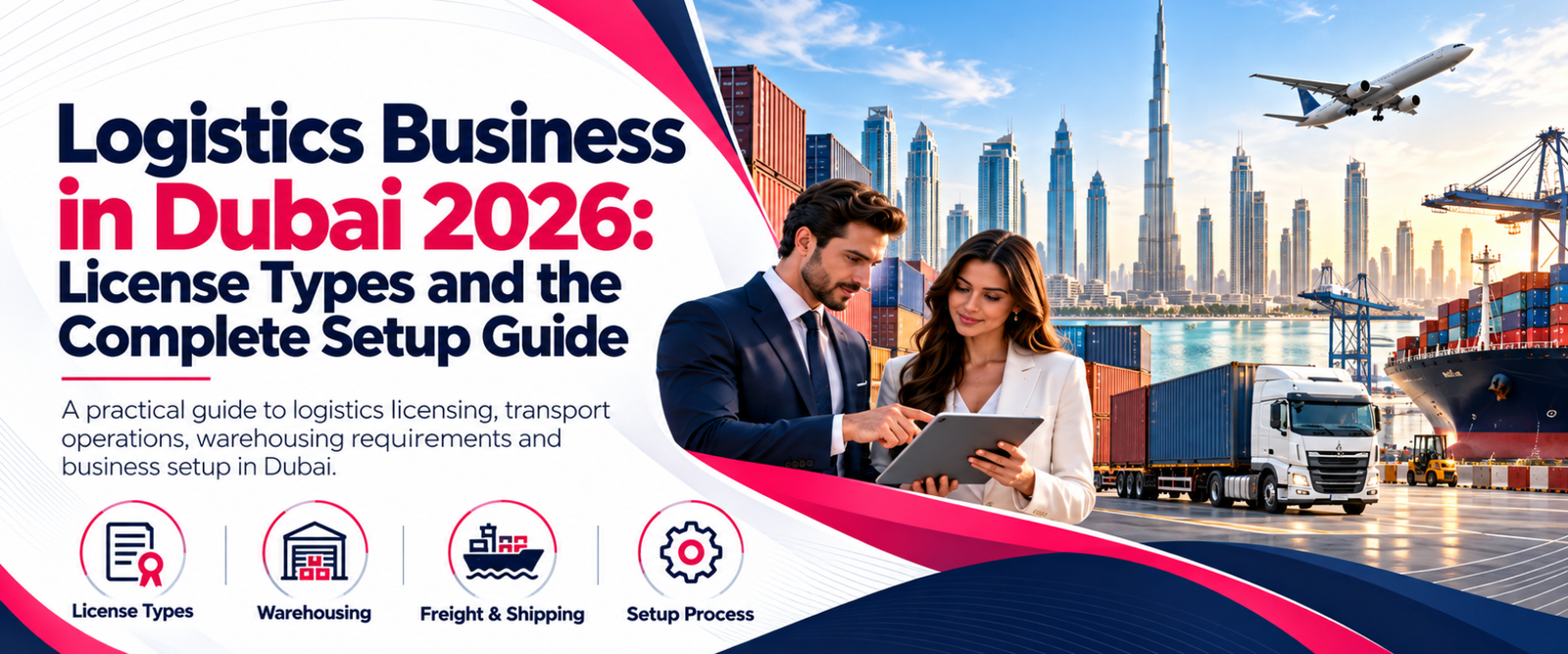
To start a logistics business in Dubai, define your exact activity, then choose a mainland DET licence for UAE clients or a free zone such as JAFZA or Dubai South for international cargo. Add a Dubai Customs code for import and export work, RTA approval if you run trucks or vans, and proper cargo insurance. A lean freight forwarding setup can start from about AED 50,000 in the first year.
Logistics Business in Dubai at a Glance
| Item | What you need |
|---|---|
| Trade licence | DET (mainland) or a free zone authority |
| Import and export | Dubai Customs code through Dubai Trade |
| Own trucks or vans | RTA approval and company-registered vehicles |
| Courier and parcels | Extra courier licence from TDRA |
| Foreign ownership | 100% for most logistics activities |
| First-year budget | About AED 50,000 (lean) to AED 1 million+ (full 3PL) |
Dubai gives a logistics company two world-class gateways. Jebel Ali Port handled 15.5 million TEUs in 2024, its highest volume since 2015, and Dubai’s two airports connect you to air cargo routes across the world. Add a location between Asia, Europe and Africa, and the case for a logistics base here is strong. What many founders underestimate is that setup happens in layers. The trade licence is only one of them.
Define Your Activity Before Your License: The Decision That Shapes Everything
Your activity decides which authorities you deal with, which permits you need and whether your licence covers the way you will earn money. Dubai recognises several logistics activities:
- Freight forwarding: arranging sea, air and road shipments for clients
- Cargo and land transport: moving goods with your own trucks and vans
- Warehousing and storage: handling, storing and managing stock
- Third-party logistics (3PL): storage, picking, packing and distribution for other companies
- Courier and express delivery: small parcels and last-mile delivery
- Customs brokerage: preparing declarations and clearing goods for clients
Pick too narrow a scope and you will need licence amendments as you grow. Pick too broad a scope and you trigger approvals you cannot yet meet. Confirm the scope with the licensing authority before you submit. If you plan to move goods with your own fleet, our guide to starting a transport company in Dubai covers the fleet side in more depth.
Mainland DET Logistics License vs Free Zone: The Strategic Choice
There is no single right answer. It depends on where your revenue comes from.
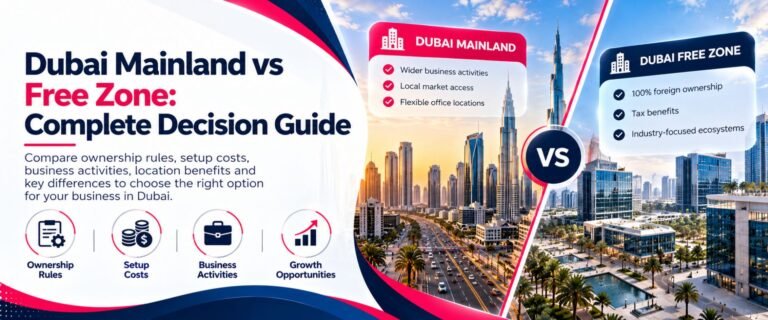
| Point | Mainland (DET) | Free zone |
|---|---|---|
| Clients | Any business across the UAE | International shippers, other free zone firms |
| Local delivery and distribution | Yes, directly | Needs a mainland entity or partner |
| Government contracts | Eligible | Limited |
| Duties on goods in transit | Standard customs rules | Goods can be stored and re-exported without duty |
| Office | Ejari registered office or warehouse | Flexi-desk to large warehouse units |
A mainland licence suits last-mile delivery, local distribution and services to UAE retailers. Foreign investors can own 100% of most mainland logistics companies. Read more in our mainland company formation in Dubai guide. A free zone suits re-export, sea and air freight and port or airport based operations. Compare options in our Dubai free zone business setup guide.
Best Free Zones for Logistics Businesses in Dubai
| Free zone | Best for | Main advantage |
|---|---|---|
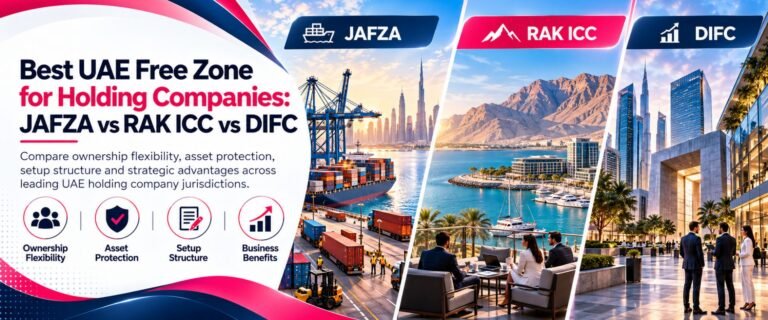
| JAFZA (Jebel Ali Free Zone) | Sea freight, import and export, 3PL | Next to Jebel Ali Port, large warehouse and yard options |
| DAFZA (Dubai Airport Free Zone) | Air freight, express and high-value cargo | Located at Dubai International Airport |
| Dubai South (Logistics District) | Multimodal logistics, e-commerce, cold chain | Near Al Maktoum International Airport with sea-air links to Jebel Ali |
| Dubai CommerCity | E-commerce fulfilment and returns | Free zone built for online retail logistics |
| IFZA | Freight brokerage and logistics consulting | Lower cost for asset-light businesses without a warehouse |
The licence fee is usually the smallest cost. Warehouse rent, visas, insurance and fleet costs make up most of your budget. For a low-cost start without a warehouse, look at an IFZA free zone company.
Two Approvals That Run Parallel to the License: RTA and Dubai Customs
RTA Vehicle Registration and Transport Permits
If you operate trucks, vans or delivery bikes, the Roads and Transport Authority must approve your goods transport activity before any vehicle works commercially. Vehicles must be registered in the company’s name, insured for commercial use and fitted with approved tracking where required. Heavy trucks also follow RTA rules on permitted routes and times. Start the RTA process alongside your trade licence, not after it.
Dubai Customs Code (Importer and Exporter Registration)
Any company that imports, exports or clears goods through Dubai needs a Dubai Customs client code, registered through the Dubai Trade portal. The code links your company to the customs clearance system and is needed before your first shipment. The government fee is modest and registration usually takes a few working days once your trade licence is issued. Freight forwarders and customs brokers may also need to register as a clearing agent.
Courier Licence for Parcel Businesses
Courier and express parcel companies need an additional licence from the Telecommunications and Digital Government Regulatory Authority (TDRA), which regulates the postal and courier sector. Plan for this if parcels are your core service.
How to Start a Logistics Business in Dubai
- Define your activity: forwarding, transport, warehousing, 3PL, courier or customs brokerage.
- Choose your jurisdiction: mainland DET or a logistics free zone.
- Reserve your trade name and get initial approval. Protect your brand with trademark registration.
- Secure premises: an Ejari registered office or warehouse on the mainland, or a free zone unit.
- Submit your licence application with shareholder documents.
- Apply for RTA approval if you run your own vehicles.
- Register with Dubai Customs for your client code.
- Arrange insurance: cargo liability, vehicle and warehouse cover.
- Complete post-licence setup: visas through our PRO services team, a corporate bank account, and tax registration.

Insurance Every Logistics Company Needs
- Cargo or freight liability: covers loss, damage or delay claims from clients
- Commercial vehicle insurance: mandatory for every registered vehicle
- Warehouse property and fire cover: for your building and stock
- Cold chain and product liability: for food and pharmaceutical logistics
Large clients and banks will ask for your insurance certificates during onboarding, so arrange cover before you sign contracts.
Logistics Business Setup Cost in Dubai
| Setup type | Typical first-year budget (AED) |
|---|---|
| Lean freight forwarding or brokerage, no warehouse | 50,000 to 90,000 |
| Mainland company with a small warehouse and a few vehicles | 150,000 to 400,000 |
| Full 3PL with a large warehouse and fleet | 400,000 to 1,000,000+ |
The main cost items are:
- Trade licence and registration fees
- Office or warehouse rent
- Vehicles, registration, tracking and insurance
- Dubai Customs code and any clearing agent registration
- Staff visas, medical tests and Emirates ID
- Warehouse management software and equipment
These are market ranges and change with your choices. For the licence side, try our business setup cost calculator.
VAT and Corporate Tax for Logistics Companies
- VAT: local transport and delivery inside the UAE is charged at 5%. International transport of goods, and related services, is generally zero-rated. Registration is mandatory once taxable supplies pass AED 375,000 a year. Our VAT consultants can set this up correctly.
- Corporate tax: 0% on taxable income up to AED 375,000 and 9% above. A free zone company that meets the Federal Tax Authority’s qualifying conditions can pay 0% on qualifying income, and logistics services are among the qualifying activities.
- Bookkeeping: keep separate records for local and international jobs. Our accounting services team supports logistics firms with VAT returns and annual tax filings.
Common Mistakes That Delay Logistics Businesses
- Treating the trade licence as the only step and finding out about RTA or customs rules when the first job arrives
- Choosing a free zone and then trying to deliver directly to mainland clients
- Signing a warehouse lease before confirming the activity allows storage at that site
- Running without cargo liability insurance to save money in year one
Setting Up Your Logistics Business in Dubai
Run the licence, RTA and customs tracks at the same time and you can be operating within weeks instead of months. DIAC manages logistics company formation across mainland and free zones, from licence and customs registration to warehouse location advice, insurance introductions and staff visas. If you trade goods as well as move them, see our guide to general trading licences, and for online sellers, how to start an e-commerce business in Dubai.
People Also Ask: Logistics Business Dubai FAQs
What licence is needed to start a logistics company in Dubai?
A trade licence from the Department of Economy and Tourism for mainland companies, or from a free zone authority such as JAFZA or Dubai South. The licence must match your activity, whether forwarding, transport, warehousing or 3PL.
Do I need RTA approval to start a logistics company in Dubai?
Only if you operate your own commercial vehicles. Freight forwarders who subcontract all transport do not need RTA approval for a fleet.
Do logistics companies need a Dubai Customs code?
Yes, if you import, export or clear goods. You register through Dubai Trade after getting your trade licence, and it usually takes a few working days.
Which is better for a logistics business in Dubai, mainland or free zone?
Mainland is better for local delivery and serving UAE businesses directly. A free zone is better for international freight, re-export and port or airport operations.
Can a foreigner own 100% of a logistics company in Dubai?
Yes. Foreign investors can own 100% of most logistics companies on the mainland and in all free zones.
How much does it cost to start a logistics company in Dubai?
A lean forwarding business without a warehouse can start from about AED 50,000 to 90,000 in year one. Warehousing and fleet operations cost several hundred thousand dirhams or more.
How long does it take to set up a logistics company in Dubai?
A trade licence usually takes one to three weeks. Customs registration adds a few days, while RTA fleet approval, warehouse fit-out and courier licensing can add several more weeks depending on your model.
Can I start a logistics company without a warehouse?
Yes. Freight forwarding, brokerage and logistics consulting can run from an office or flexi-desk and use partner warehouses.
Conclusion
A logistics business in Dubai needs more than a trade licence. Match your activity to the right jurisdiction, add customs, RTA and courier approvals where they apply, and budget for insurance and premises from the start. Talk to our team about business setup in Dubai or book a free consultation.
About the Author
Adil Ahmad is a senior business setup consultant at DIAC who advises investors on logistics, freight forwarding and warehousing company formation across Dubai’s mainland and free zones.