
Dubai sits at GMT+4 — the only major financial centre that overlaps simultaneously with the Asian open, the European session, and the tail end of the American close. That structural advantage, combined with a population that is over 88 percent expatriate and regularly exchanges currencies, makes the city a natural base for forex trading businesses. The UAE forex market sees substantial daily volume, and Forex Expo Dubai 2026 — scheduled for September at the Dubai World Trade Centre — signals how seriously the industry treats the region as a growth market. For entrepreneurs looking to capitalise on this by establishing a licensed forex operation, Dubai offers three main regulatory pathways, each suited to a different business model.
Understanding which structure fits your intentions before submitting any application is the single most important decision in this process. The jurisdiction you choose determines your regulator, your capital requirement, your client permissions, and your timeline — and switching later is a second full licensing process. For foundational business setup in Dubai alongside the regulatory process, our consultants work alongside specialist financial services advisors to coordinate entity formation and compliance readiness.
Personal Forex Trading vs Running a Forex Company: The Distinction That Matters
This is the clarification that most guides either gloss over or skip entirely, and it catches many applicants off guard. If you trade forex using your own personal funds, no UAE business license is required. Individual retail traders can legally trade their own capital through internationally regulated brokers — including platforms like IG, OANDA, XM, and ActivTrades — without establishing a UAE company or obtaining a forex license.
A forex trading license in Dubai is required when your business provides forex services to other people. This covers four distinct commercial activities:
- Operating as a forex broker — executing trades on behalf of clients
- Managing client funds or discretionary portfolios involving forex
- Running a proprietary trading firm as a formal business entity, even trading only your own capital
- Providing forex advisory, signal, or introducing broker services as a registered commercial entity
The moment you accept client money, manage accounts on behalf of others, or earn commercial revenue from forex-related services, you require a license from the relevant UAE authority. Operating without one is a criminal offence that can result in fines, asset freezes, and prosecution.
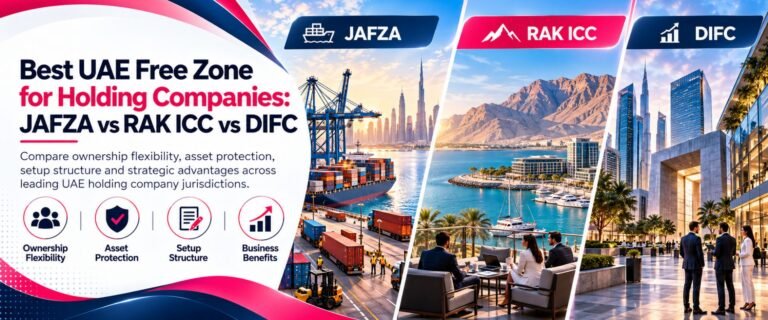
Three Regulatory Pathways: DFSA, SCA and DMCC
Dubai’s forex regulatory landscape is structured around three distinct frameworks. The right choice depends entirely on your business model.
| Factor | DMCC | DIFC (DFSA) | SCA Mainland |
| Best For | Proprietary trading (own funds) | Brokerage; client fund management | Full UAE market access; retail clients |
| Regulator | SCA-facilitated via DMCC | DFSA (Dubai Financial Services Authority) | Securities and Commodities Authority (SCA) |
| License Type | Proprietary trading license | Category 3A Brokerage License | Category 2, 4, or 5 depending on scope |
| Min. Capital | AED 50,000 share capital | USD 500,000 (approx. AED 1.84M) | AED 500,000 to AED 5,000,000+ |
| Client Funds | Not permitted | Permitted — full brokerage | Permitted — full brokerage |
| Leverage Cap | N/A (prop trading) | 30:1 retail majors; 20:1 minors | 50:1 retail majors |
| Timeline | 4 to 8 weeks | 3 to 6 months | 3 to 6 months |
| License Cost | From AED 32,000 | AED 75,000 to AED 150,000+ | AED 100,000 to AED 250,000+ |
DMCC Proprietary Trading License
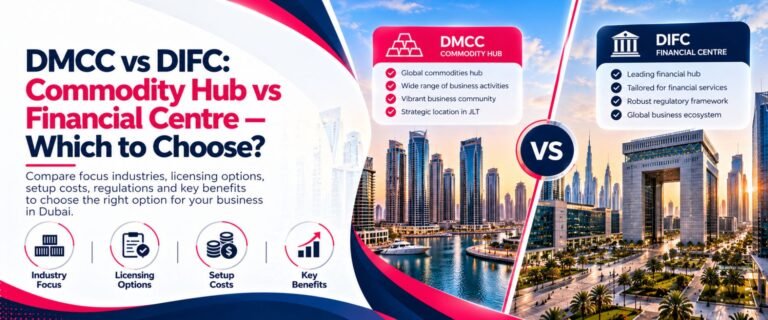
The Dubai Multi Commodities Centre (DMCC) license is the entry-level forex company structure in Dubai and the right choice for operators who want to trade the company’s own funds in foreign exchange, OTC derivatives, and exchange-traded instruments without onboarding clients or managing external money. The DMCC works with the SCA under a facilitated approval structure, so the license carries regulatory credibility without the full SCA direct licensing burden.
Key parameters: minimum share capital of AED 50,000 deposited into a UAE corporate bank account (and confirmed by bank letter), license fees from AED 32,000, and a timeline of 4 to 8 weeks for straightforward applications. The DMCC allows flexi-desk office arrangements for forex proprietary trading companies, reducing the initial office cost significantly. The critical limitation: DMCC does not permit client-facing brokerage operations. If you intend to onboard clients, take deposits, or execute trades on behalf of third parties, you need either a DFSA or SCA license.
DFSA Category 3A License (DIFC)
The Dubai Financial Services Authority (DFSA) regulates financial services conducted within the Dubai International Financial Centre (DIFC) — a geographically and legally separate free zone operating under English common law. For forex brokerages, the relevant license is the Category 3A Brokerage License, which permits dealing in investments both as agent (on behalf of clients) and as principal (taking the opposite side of client trades). This is the highest-credibility structure for institutional clients, international counterparties, and globally recognised financial operations.
The requirements are correspondingly demanding. Minimum paid-up capital is USD 500,000 (approximately AED 1,840,000). A physical office within DIFC is mandatory — flexi-desks do not meet the DFSA’s substance requirements. The DFSA conducts a thorough “fit and proper” assessment of all directors and senior managers, reviewing professional background, financial history, regulatory record, and criminal background. Timeline for a complete, well-prepared application is 3 to 6 months. The leverage cap for retail clients is 30:1 for major forex pairs and 20:1 for minor pairs, aligned with international standards.
SCA Mainland License
The Securities and Commodities Authority (SCA) is the federal regulator for mainland UAE financial markets. An SCA license gives your forex company unrestricted access to the full UAE market — including direct retail client engagement across all seven emirates — and international clients. SCA licenses are categorised by scope: Category 5 (advisory and arrangement) requires a minimum capital of AED 500,000, while Category 1-4 (full dealing, brokerage, and fund management) require AED 1,000,000 to AED 5,000,000+ in paid-up capital. The SCA’s retail leverage cap is 50:1 for major pairs, giving slightly more flexibility than the DFSA’s 30:1 limit. Timeline is 3 to 6 months including the SCA due diligence process.
Mandatory Compliance Requirements: What Regulators Require Beyond the License Fee
Regardless of which jurisdiction you choose, all UAE forex companies must meet the following ongoing compliance requirements. Failing to implement these from day one — not as an afterthought — is what causes most post-licensing regulatory problems:
- Implementation of Anti-Money Laundering (AML) policies and internal compliance framework
- Appointment of a qualified Compliance Officer to oversee regulatory obligations
- Establishment of Know Your Customer (KYC) procedures for client verification
- Maintenance of detailed transaction monitoring and reporting systems
- Regular submission of compliance reports to relevant regulatory authorities
- Proper record keeping of all financial transactions and client documentation
- Adherence to risk management protocols and internal audit requirements
- Ongoing staff training on compliance, AML, and financial regulations
- UAE banks apply enhanced due diligence for forex companies, requiring detailed business evaluation
- Banks review business plans, AML frameworks, client geography, and transaction flow projections
- Clear beneficial ownership structure is mandatory for account approval
- Working with banks experienced in handling forex clients improves account opening success rates
One area that consistently surprises new forex operators: banking is significantly more complex for forex companies than for standard trading businesses. UAE banks apply enhanced due diligence to all financial services firms. Expect detailed scrutiny of your business plan, AML controls, target client geography, transaction flow projections, and beneficial ownership structure. Working with a bank that has established forex client relationships from the start is more effective than approaching multiple banks independently.
How to Start a Forex Trading Company in Dubai
- Clarify your business model first: proprietary trading (DMCC), brokerage for clients (DFSA DIFC or SCA mainland), or forex support services (advisory, introducing broker, training). The model determines everything else.
- Prepare your business plan covering your target market, client acquisition strategy, trading approach, risk management framework, and financial projections for three years. This is a regulatory submission document, not a summary.
- Draft your compliance manual and AML/KYC policies with the support of a UAE compliance specialist. Regulators review the quality of these documents as evidence of operational readiness.
- Register your commercial entity: DMCC company for proprietary trading, DIFC entity for DFSA brokerage, or mainland LLC through DET for SCA-regulated operations.
- Secure office space meeting the regulator’s requirements. Approach this stage in parallel with the company registration — DFSA requires proof of DIFC office before license issuance.
- Submit the license application to the relevant authority: DMCC portal for proprietary trading, DFSA portal for DIFC brokerage, or the SCA for mainland. Include all documents: business plan, compliance manual, director CVs, passport copies, educational certificates, criminal background checks, financial references, and proof of capital.
- Undergo the fit and proper review and respond to any regulator queries. DFSA may request in-person interviews with key personnel. Allow adequate time for this stage — rushing responses creates avoidable delays.
- Upon in-principle approval, deposit the required share or paid-up capital into a UAE corporate bank account and provide the bank confirmation letter to the regulator.
- Receive the final license, activate your trading platform (MT4, MT5, or proprietary), apply for staff visas through our PRO services team, and register for VAT and corporate tax with the FTA.
Forex Trading Company Setup Cost Dubai 2026
Costs vary significantly by jurisdiction and business model. The table below covers the primary components across all three main structures.
| Cost Component | Estimated Amount (AED) |
| DMCC Proprietary Trading License (license fees) | From AED 32,000 |
| DMCC Minimum Share Capital (mandatory deposit) | AED 50,000 |
| DIFC Category 3A Brokerage License (fees) | AED 75,000 to AED 150,000+ |
| DIFC Minimum Paid-Up Capital | USD 500,000 (approx. AED 1,840,000) |
| SCA Mainland License (Category 5 advisory) | AED 500,000 capital minimum |
| SCA Mainland License (Category 1-4 brokerage) | AED 1,000,000 to AED 5,000,000+ |
| Office Rent — DMCC (flexi-desk or office, per year) | 25,000 to 80,000 |
| Office Rent — DIFC (physical office mandatory, per year) | 80,000 to 300,000+ |
| Compliance Manual and AML/KYC Policy Preparation | 15,000 to 50,000 (consultant fees) |
| Trading Platform (MT4/MT5 license, annual) | Variable; typically USD 5,000 to USD 25,000+ |
| Staff Visa per Employee | 4,000 to 6,000 |
| Total First-Year Estimate (DMCC prop trading) | AED 120,000 to AED 200,000 |
| Total First-Year Estimate (DIFC brokerage) | AED 2,500,000 to AED 5,000,000+ |
For qualifying free zone persons under UAE corporate tax law, a 0% corporate tax rate applies to qualifying income. DIFC and DMCC companies can potentially qualify for this rate, subject to meeting the economic substance and qualifying income tests. Our accounting services team advises forex companies on corporate tax structure, FTA registration, VAT treatment of financial services, and the annual reporting obligations that DFSA and SCA require.
Setting Up Your Forex Trading Company in Dubai
The most consistent failure mode in forex company setups is choosing the wrong jurisdiction for the intended business model. Operators who want to trade their own funds apply for a full brokerage license they do not need — at ten times the cost and five times the timeline. Operators who want to run a client-facing brokerage attempt to operate under a DMCC proprietary trading license that does not permit it. Getting the model-to-jurisdiction match right at the start is the decision that shapes everything.
Dubai International Advisory Consultants coordinates forex trading company formation across all three regulatory pathways — from DMCC entity registration and DFSA DIFC applications through to SCA mainland licensing coordination, AML/KYC compliance framework support, banking introductions, and staff visa processing. Visit the business setup in Dubai page to begin your forex trading company consultation.
Conclusion
Starting a forex trading company in Dubai requires matching your business model to the correct regulator: DMCC for proprietary trading with your own funds (AED 50,000 capital, 4 to 8 weeks); DFSA Category 3A for brokerage operations in DIFC (USD 500,000 capital, 3 to 6 months); or SCA mainland for full UAE market access (AED 500,000 to AED 5,000,000+ capital, 3 to 6 months). Personal forex trading with your own funds does not require a company or license. All licensed forex companies must maintain AML/KYC programmes, client fund segregation, and physical operational presence. Banking is subject to enhanced due diligence for all financial services companies. The fit and proper test applies to all directors and senior managers. 0% corporate tax is available for qualifying free zone entities.
People Also Ask: Forex Trading Company Dubai FAQs
Is forex trading legal in Dubai?
Yes, forex trading is completely legal in Dubai and the UAE. Individual retail traders can trade their own funds through internationally regulated brokers without needing a UAE business license. However, anyone operating a forex company — offering brokerage services, managing client funds, or earning commercial revenue from forex-related services — must hold a valid license from either the DFSA (for DIFC operations), the SCA (for mainland operations), or operate under the DMCC’s facilitated proprietary trading license.
What is the difference between a DMCC forex license and a DFSA license?
A DMCC proprietary trading license allows your company to trade its own funds in forex and derivatives markets — you cannot onboard clients or manage third-party money under this structure. It requires a minimum share capital of AED 50,000 and costs from AED 32,000 in license fees, with a 4 to 8 week timeline. A DFSA Category 3A Brokerage License from the DIFC allows full client-facing brokerage operations — executing trades for clients, managing accounts, and handling client funds. It requires a minimum paid-up capital of USD 500,000 and takes 3 to 6 months to obtain.
Do I need a forex license to trade my own money in Dubai?
No. If you trade your own personal capital through a regulated broker, you do not need a UAE forex trading license. A license is required only when you provide forex services commercially — operating a brokerage, managing client funds, running a proprietary trading firm as a registered business, or offering advisory or introducing broker services for fee. Operating as an unlicensed forex service provider is a criminal offence in the UAE regardless of how the business is structured.
What capital is required to start a forex trading company in Dubai?
Capital requirements depend on the license type. DMCC proprietary trading requires a minimum share capital deposit of AED 50,000. The DFSA Category 3A Brokerage License (DIFC) requires a minimum paid-up capital of USD 500,000 (approximately AED 1.84 million). SCA mainland licenses range from AED 500,000 for Category 5 advisory activities to AED 5,000,000 or more for full Category 1 to 4 brokerage operations. All capital must be deposited into a UAE corporate bank account and confirmed by a bank letter before the license is formally issued.
What is the fit and proper test in the DFSA forex licensing process?
The DFSA’s fit and proper assessment is a thorough background review of all directors, senior managers, and key personnel proposed for a DIFC forex company. It evaluates professional qualifications and experience in financial services, regulatory track record in previous roles, financial history (including personal insolvency checks), criminal background, and professional references. At least one director with verifiable forex or investment management experience is required. Poor fit and proper outcomes are the most common cause of DFSA application rejections or delays.
How long does it take to get a forex trading license in Dubai?
Timeline depends on the license type. A DMCC proprietary trading license can be issued in 4 to 8 weeks for a well-prepared application. A DFSA Category 3A Brokerage License from the DIFC typically takes 3 to 6 months due to the thoroughness of the regulatory review, fit and proper assessment, and compliance documentation requirements. SCA mainland licenses follow a similar 3 to 6 month timeline. Incomplete documentation, compliance manual deficiencies, or fit and proper issues at the director level are the most common causes of extended timelines.
Can a general trading license be used for forex operations in Dubai?
No. A general commercial or professional trade license from DET or any free zone authority does not authorise forex trading or financial services operations. Forex is a regulated activity in the UAE, and operating it under a non-financial services license is a regulatory violation. Any company providing forex brokerage, managing client funds, or earning revenue from forex services must hold an appropriate license from the DFSA, SCA, or operate under the DMCC proprietary trading framework with SCA facilitation.
About the Author
Adil Ahmad is a business setup specialist and content strategist at Dubai International Advisory Consultants. He specialises in financial services company formation in Dubai, with practical expertise in forex and trading company licensing across DFSA DIFC, DMCC, and SCA mainland frameworks, entity registration, AML compliance readiness, and the regulatory documentation requirements that govern forex trading company setup across the UAE.