By Adil Ahmad, Senior Business Setup Consultant, Dubai International Advisory Consultants
Summary
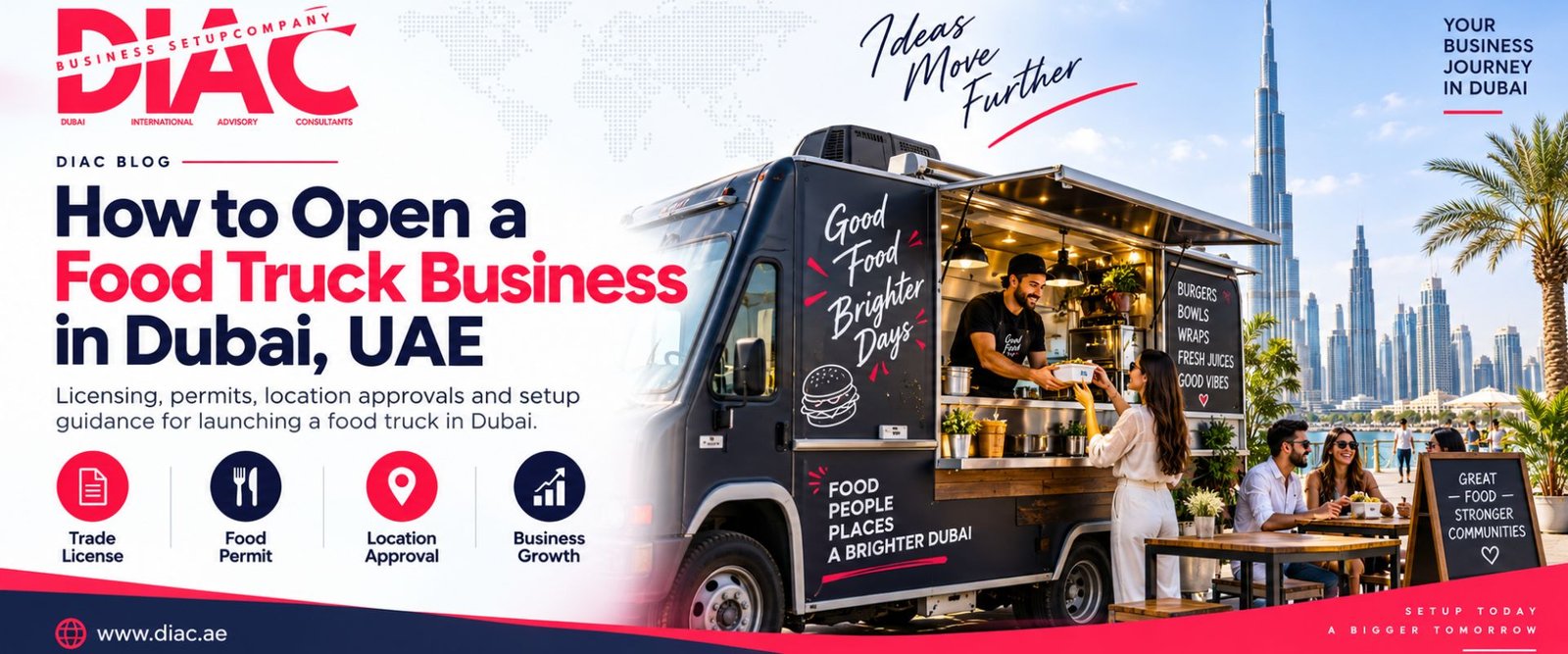
To open a food truck business in Dubai, you need a DET trade licence for a mainland company, a Dubai Municipality food truck permit, RTA approval for the vehicle, a licensed kitchen for preparation and storage, and a signed contract for every place you park. Budget roughly AED 120,000 to 250,000 to launch. Location, a tight menu and clean compliance decide whether the truck makes money.
Food Truck Business in Dubai at a Glance
| Item | What you need |
|---|---|
| Company type | Dubai mainland company (sole establishment or LLC) |
| Trade licence | Department of Economy and Tourism (DET) |
| Food truck permit | Dubai Municipality, AED 160, issued in about 1 working day |
| Food safety | FoodWatch registration, trained Person in Charge, staff health cards |
| Vehicle | RTA registration and approval of the modified truck |
| Kitchen | Licensed facility for food preparation and storage |
| Location | Space contract and landlord NOC, or an event permit |
| Typical launch budget | AED 120,000 to 250,000 |
Understanding the Food Truck Business Model in Dubai
A food truck in Dubai is not a truck that drives around looking for customers. It is a licensed mobile food outlet that works from approved spots: food truck parks, private land such as malls and offices, beaches and communities with the owner’s permission, and events. Random street parking is not allowed.
That shapes the model. Your income depends on three things: the quality of the locations you secure, the speed of service at peak hours, and how many event days you can book. Think of it as a small restaurant with a lower rent and a smaller kitchen, not as a street stall.
Why Most Food Truck Businesses Fail in Dubai
From the food and beverage setups we have handled, failures usually come from planning, not from the food. The common causes are:
- Buying and fitting out a truck before securing a location
- Underestimating the need for a licensed kitchen
- A menu too long for a small kitchen, which slows service
- Relying on one location with no event income
- No cash buffer for the summer months, when outdoor footfall drops
Legal Requirements and Approvals
Trade License
Food trucks serve the public onshore, so you need a mainland trade licence from the Department of Economy and Tourism, not a free zone licence. Most owners choose a sole establishment or an LLC with a mobile food or restaurant activity. Our guide to mainland company formation in Dubai explains both options.
Food Safety Approval
Dubai Municipality issues the food truck permit. According to the Municipality’s food permits and approvals guide, the truck must be registered on FoodWatch, follow the Dubai Food Code, hold an inspection grade of A, B or C with no critical or major violations, and have licensed facilities for preparation and storage. The fee is AED 160 and the permit is usually issued in one working day. Every food establishment also needs a trained Person in Charge (PIC), and all staff who handle food need valid occupational health cards. Read more in our food licence in Dubai guide.
Vehicle Approval
The truck must be registered with the Roads and Transport Authority (RTA), and any conversion must meet safety standards. Gas systems, fire extinguishers, ventilation and electrical fittings are checked, so use a fabricator who has built approved trucks before.
Location Permits
For a fixed spot, you need a space contract with the landowner, a No Objection Certificate from the landlord and Dubai Municipality approval. Permanent location permits are valid for up to one year. For events, you apply for an event permit at least three working days before the event starts.
Central Kitchen Requirement Explained Properly
This is the point most new owners miss. A food truck has limited space for bulk preparation and storage, so Dubai Municipality expects you to have adequate licensed facilities behind it. In practice, you have three options:
- Your own central kitchen: best control, highest cost. See how to start a cloud kitchen in Dubai, since the setup is similar.
- A link with an existing licensed restaurant or catering unit: common for new owners. Both businesses register on FoodWatch.
- A shared commercial kitchen: lower cost, but check it holds the right licence and grade.
Step by Step Process to Open a Food Truck Business in Dubai
- Test your concept and budget. Price your menu and estimate daily orders before spending on a truck.
- Choose your legal structure and reserve a trade name. Protect a strong brand with trademark registration.
- Get initial approval and your DET trade licence. The Invest in Dubai portal lists activities and fees.
- Secure your kitchen, whether your own, shared or linked.
- Buy and fit out the truck to municipality and RTA standards.
- Register with RTA and pass vehicle and safety checks.
- Register on FoodWatch, appoint your Person in Charge and get staff health cards.
- Sign location contracts and apply for the Dubai Municipality food truck permit.
- Open your bank account, hire staff and launch. Our PRO services team handles visas, and our guide to corporate bank account opening helps with banking.
Real Cost and Investment Breakdown
Initial Setup Cost
| Item | Typical range (AED) |
|---|---|
| Trade licence and registration | 13,000 to 19,000 |
| Truck purchase (used or new) | 35,000 to 120,000 |
| Kitchen fit-out and equipment | 40,000 to 100,000 |
| RTA registration and approvals | 1,500 to 8,000 |
| Municipality permit, training and health cards | 2,000 to 5,000 |
| Insurance, branding and POS system | 8,000 to 20,000 |
Most owners launch with AED 120,000 to 250,000, plus three months of running costs in reserve. Prices change, so use our business setup cost calculator for the licence side.
Monthly Running Costs
- Location rent or revenue share, often the biggest cost
- Kitchen rent if you do not own one
- Ingredients and packaging, usually 30% to 35% of sales
- Staff salaries, visas and fuel or generator costs
Monthly Revenue Reality
Do the maths before you commit. A truck serving 120 orders a day at an average of AED 35 takes about AED 4,200 a day. Over 26 trading days, that is roughly AED 109,000 a month before costs. Halve the order count for slow summer days and check the business still covers rent and salaries. Once sales pass AED 375,000 a year, VAT registration becomes mandatory, and our VAT consultants and accounting services team can manage it.
Choosing the Right Food Concept That Sells
High-Demand Concepts in Dubai
- Burgers, loaded fries and wraps
- Specialty coffee and cold drinks
- Shawarma, karak tea and Emirati snacks
- Desserts such as waffles, ice cream and churros
Niche Concepts That Stand Out
- Healthy bowls and vegan options near offices and gyms
- Regional street food such as Indian chaat, Korean or Mexican
- Breakfast trucks at beaches and community markets
If coffee is your focus, our guide on how to start a coffee shop in Dubai covers sourcing and pricing that also apply to a truck.
Location Strategy That Drives Revenue
- Food truck parks: steady footfall, but higher rent and competition.
- Corporate and residential communities: reliable lunch and evening trade.
- Beaches and parks: strong in winter, weak in summer.
- Events and festivals: short, high-margin days. Build contacts with organisers, and read our event management licence guide to understand how events are permitted.
Aim for a mix: one steady base location plus regular event bookings.
Daily Operations Flow That Actually Works
- Morning prep and stock loading at the licensed kitchen
- Temperature checks and hygiene log before leaving
- Set-up and safety check at the location
- Service with a clear order, pay and pick-up flow
- Close-down, waste disposal and cleaning back at the kitchen
Menu Engineering for Higher Profit
- Keep 6 to 10 items that share ingredients
- Price each item for a food cost under 35%
- Add high-margin extras: drinks, sauces, desserts and combos
- Make every item ready in under 5 minutes
Compliance and Food Safety Challenges
Heat is the biggest risk in Dubai. Keep cold food at safe temperatures, log readings, and never let stock sit in a hot truck. Keep staff health cards, your permit and hygiene records on board, because inspections can happen at any location. A low inspection grade can stop your permit renewal.
Common Mistakes That Reduce Profit
- Signing a long location contract without testing footfall
- Paying for a custom truck when a used approved truck would do
- Ignoring summer and Ramadan changes in demand
- Skipping delivery apps on slow days
Food Trucks in Other Emirates
Each emirate has its own rules. In Abu Dhabi, mobile food businesses need a permit from the Abu Dhabi Agriculture and Food Safety Authority (ADAFSA). If you plan to expand, check each authority before signing contracts. For a wider view, see our guide to starting a food and beverage business in Dubai.
External Resources for Official Guidelines
- Dubai Municipality food permits and approvals
- Invest in Dubai (DET trade licences)
- Roads and Transport Authority
Frequently Asked Questions
How much does it cost to open a food truck in Dubai?
Most owners spend AED 120,000 to 250,000, covering the licence, truck, fit-out, approvals and branding. Keep extra funds for three months of running costs.
Do I need a central kitchen for a food truck in Dubai?
You need access to licensed facilities for preparation and storage. This can be your own kitchen, a shared commercial kitchen or a link with a licensed restaurant.
Is a food truck business profitable in Dubai?
It can be, if you secure good locations, keep food costs near 30% and book events. Weak locations and summer slowdowns are the main risks.
Can I park my food truck anywhere in Dubai?
No. You can only operate at approved locations with a space contract and landlord NOC, or at events with a valid permit.
How long does it take to get a food truck licence in Dubai?
The trade licence takes about one to two weeks, and the Dubai Municipality permit about one working day once your documents are complete. Truck fit-out usually takes the longest.
Do food truck staff need health cards in Dubai?
Yes. Everyone who handles food needs a valid occupational health card, and the business needs a trained Person in Charge who is responsible for food safety on the truck and at the kitchen.
Can I open a food truck in a free zone?
No. Food trucks serve the public onshore, so you need a Dubai mainland trade licence.
Conclusion
A food truck is one of the most affordable ways to enter Dubai’s food scene, but it rewards careful planning. Secure your kitchen and locations first, keep the menu tight and stay on top of compliance. DIAC handles the trade licence, approvals, visas and banking so you can focus on the food. Explore our business setup in Dubai services or book a free consultation today.